Flooded Basement Cleanup Cost in Denver: Pump-Out, Drying, Sanitizing, and Repairs

This guide answers one question: What drives the cost of flooded basement cleanup in Denver, and what is typically included vs priced separately?
Not covered: sewage-cleanup pricing (that’s a separate intent), general whole-home water restoration pricing, or step-by-step emergency response. For the canonical overview of the overall water damage restoration workflow (assessment → drying → documentation), use: Accountable Home Services
Safety note: If basement water may be contaminated (backup, sewage, floodwater), avoid direct contact and treat it as a health risk. (CDC)
How much does flooded basement cleanup cost?
Flooded basement cleanup cost varies widely because “cleanup” can mean anything from a simple pump-out and dry-down to contaminated-water removal, selective demolition, and repairs. The most reliable way to predict cost is to identify (1) water category/contamination, (2) how far water traveled, and (3) which materials absorbed water.
Instead of relying on a single average number, use the sections below to understand what scope you’re actually paying for.
What does “flooded basement cleanup” usually include?
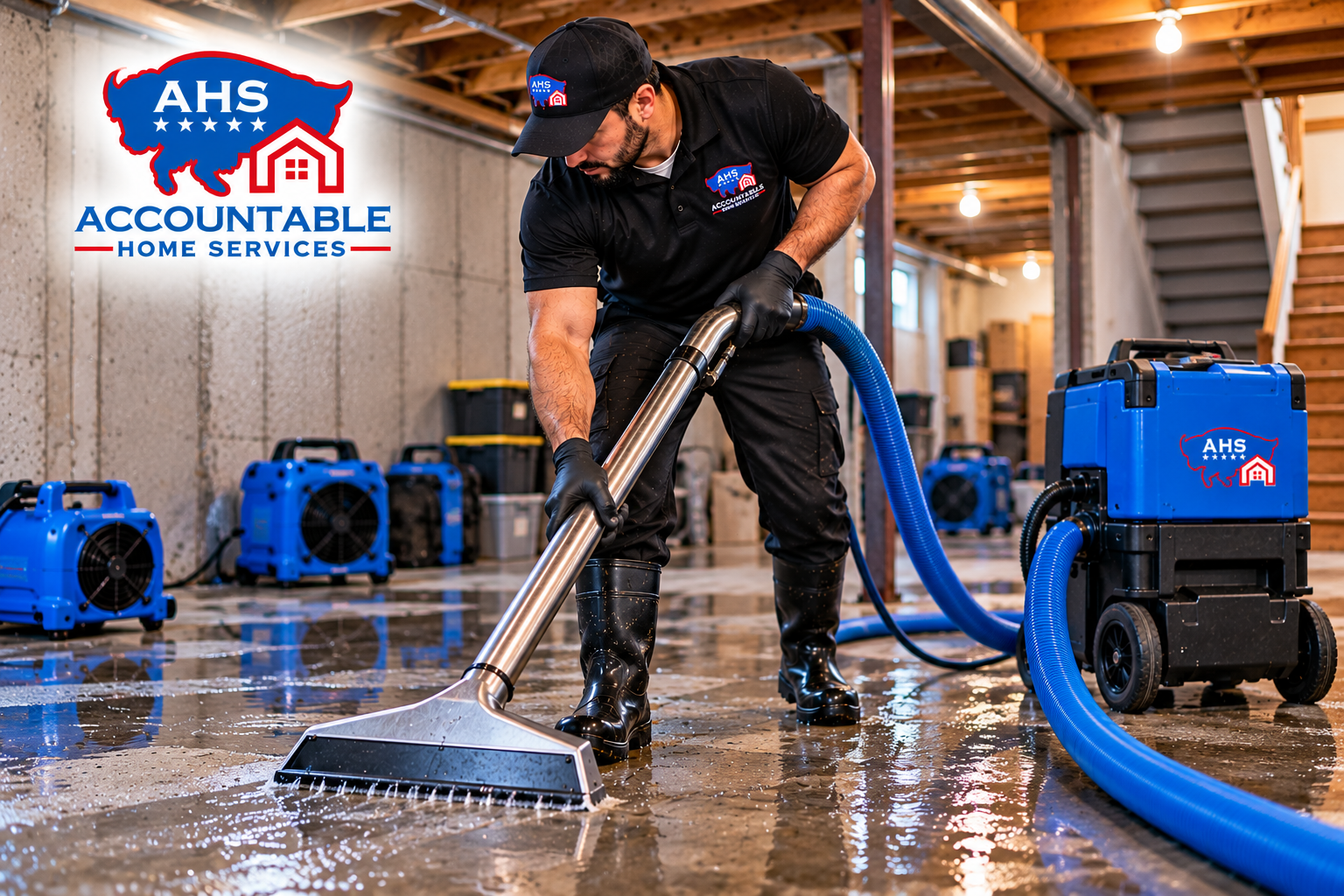
In most professional scopes, flooded basement cleanup breaks into four buckets: water removal, drying + humidity control, cleaning/sanitizing as appropriate, and repairs/rebuild if needed.
Here’s how those buckets map to internal service references (kept informational):
- Flood cleanup scope
- Standing water removal
- Stabilization/mitigation
- Structural drying + monitoring
- Dehumidification
What drives flooded basement cleanup cost the most?
The biggest cost drivers are contamination level, water volume and spread, materials affected, and how many days drying/monitoring must run.
Cost-driver table (what changes the bill)
| Cost driver | Why it changes cost | What it looks like in a home | What to ask on an estimate |
|---|---|---|---|
| Water category / contamination | More safety steps, cleaning, disposal, and material removal | Backup water, dirty water, unknown source | How is the water categorized and what precautions or material removal does that require? |
| Square footage / number of rooms | More labor plus more equipment time | Water spread beyond one room | Which rooms are included in the drying boundary? |
| Materials affected | Some materials dry slowly or must be removed | Carpet padding, drywall paper, insulation, cabinets | Which materials are being dried versus removed, and why? |
| Hidden spread (under floors / behind walls) | Requires mapping, access, and longer monitoring | Wet baseboards, toe-kicks, flooring edges | How will you confirm what is wet behind or under surfaces? |
| Time since the loss | Delays can increase scope (odor, microbial risk, extra demolition) | Job starts days later | What changed because time passed? |
| Access constraints | Hard-to-reach areas require more time or targeted access | Built-ins, tight cabinets, dense flooring assemblies | What access is needed to dry correctly? |
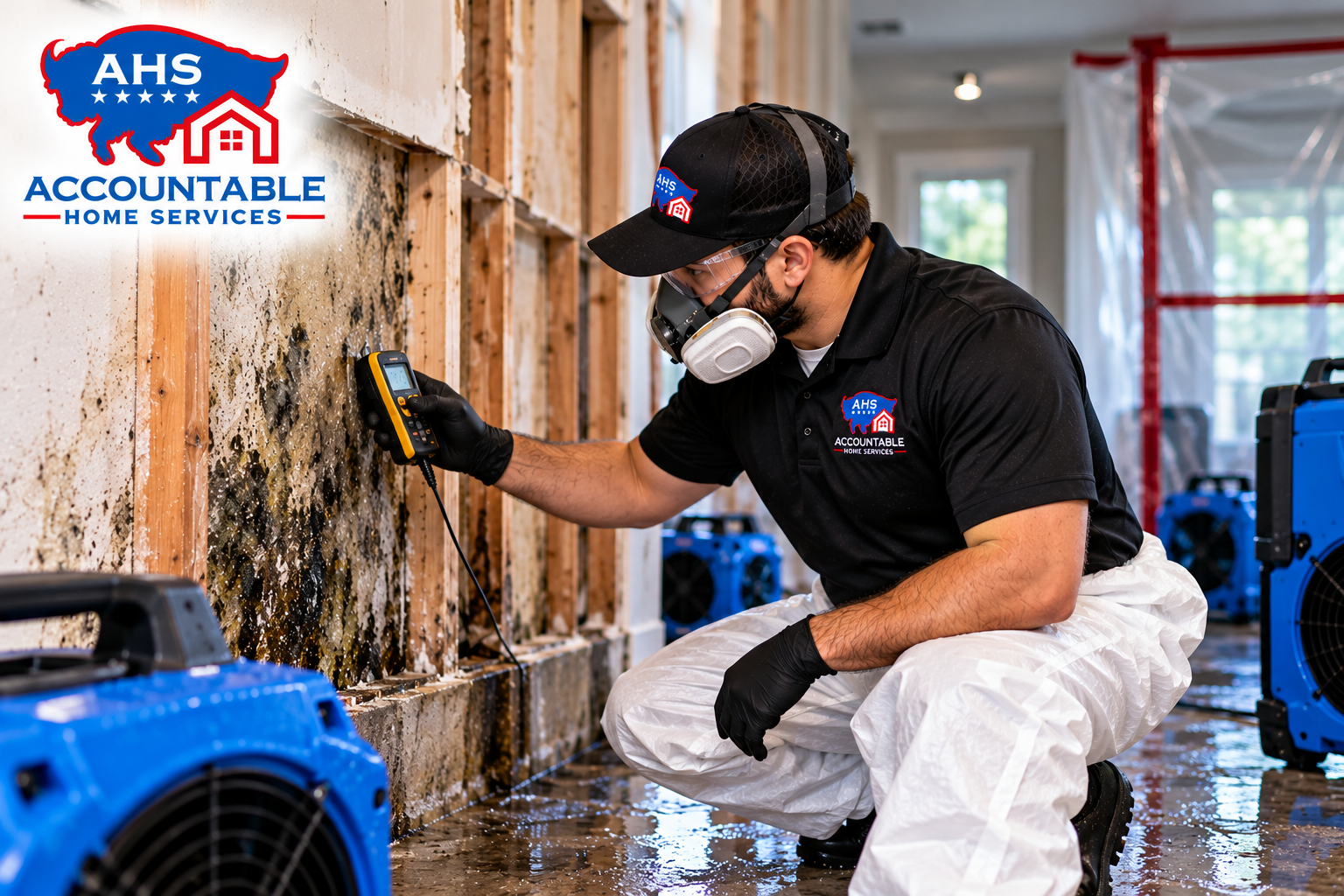
| Monitoring and verification needs | Proper verification is labor and time dependent | Daily checks and equipment adjustments | What is the monitoring schedule and what readings define dry? |
For best-practice context on professional water damage restoration procedures and precautions, see the ANSI/IICRC S500 overview.
How contamination changes the scope (without guessing)
If the water source is unknown or potentially contaminated, the scope usually shifts from “drying” toward safe removal + sanitizing + disposal of affected porous materials. This is one reason flooded-basement jobs can vary drastically.
CDC guidance notes floodwater can contain hazards and recommends protective gear and careful cleanup practices.
If you suspect sewage/black-water conditions, keep that scope separate and use this dedicated internal reference (without treating this post as a sewage-cost guide) Sewage Cleanup.
What’s usually included vs priced separately?
Many people hear “basement cleanup” and assume it includes everything through repairs. In practice, cleanup/drying and repairs/rebuild are often separated so the drying outcome can be verified before reconstruction.
Included (often)
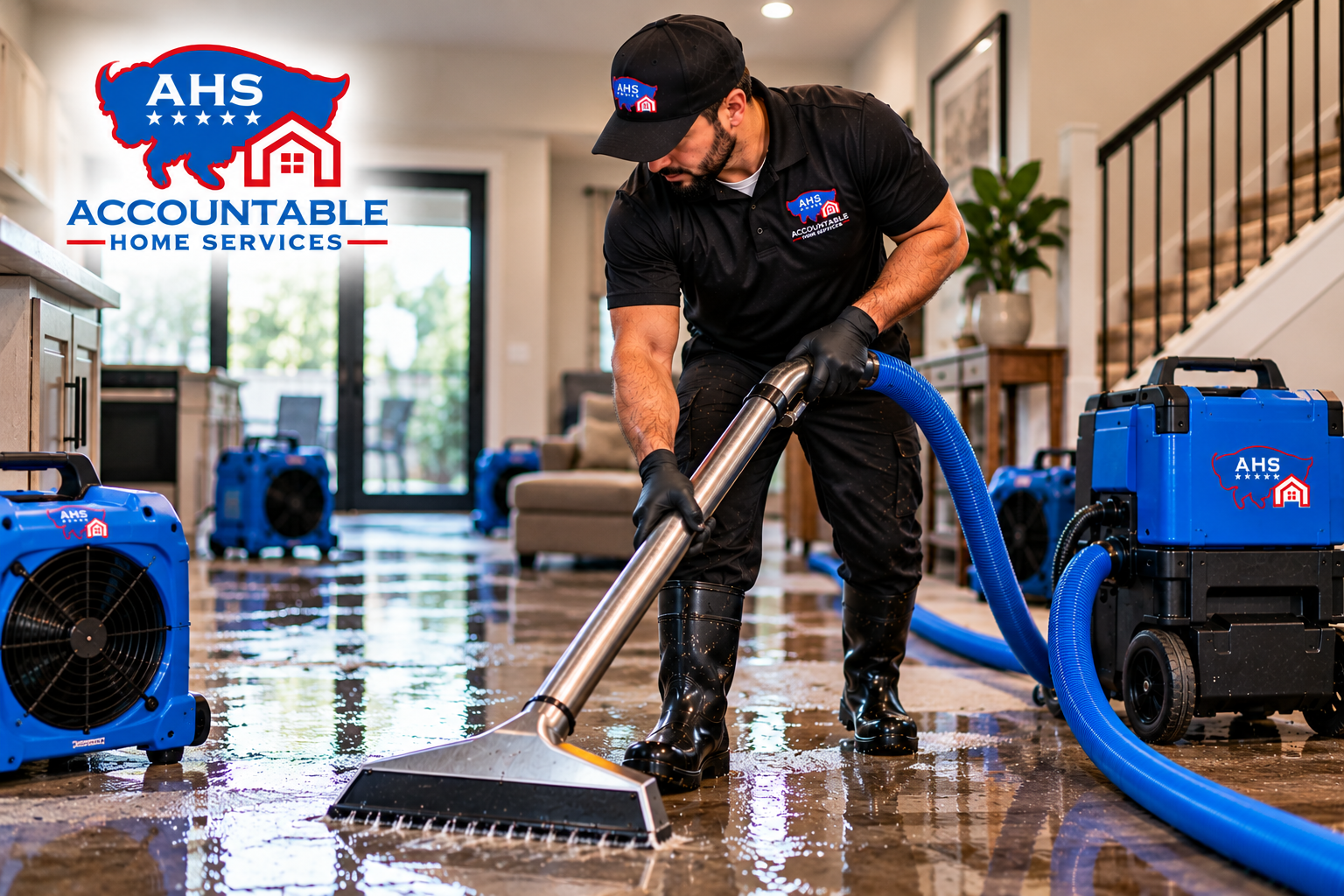
- Pump-out or extraction of standing water
- Setup of drying equipment (air movers + dehumidification)
- Moisture monitoring visits and equipment adjustments
- Basic cleaning/sanitizing appropriate to the water source
- Documentation of affected areas and readings (varies)
Often priced separately (or excluded)
- Drywall replacement, baseboards, painting
- Flooring replacement (carpet/pad, laminate, engineered wood)
- Cabinet base/toe-kick rebuild
- Electrical repairs, HVAC servicing
- Contents restoration (furniture/textiles) unless specifically included
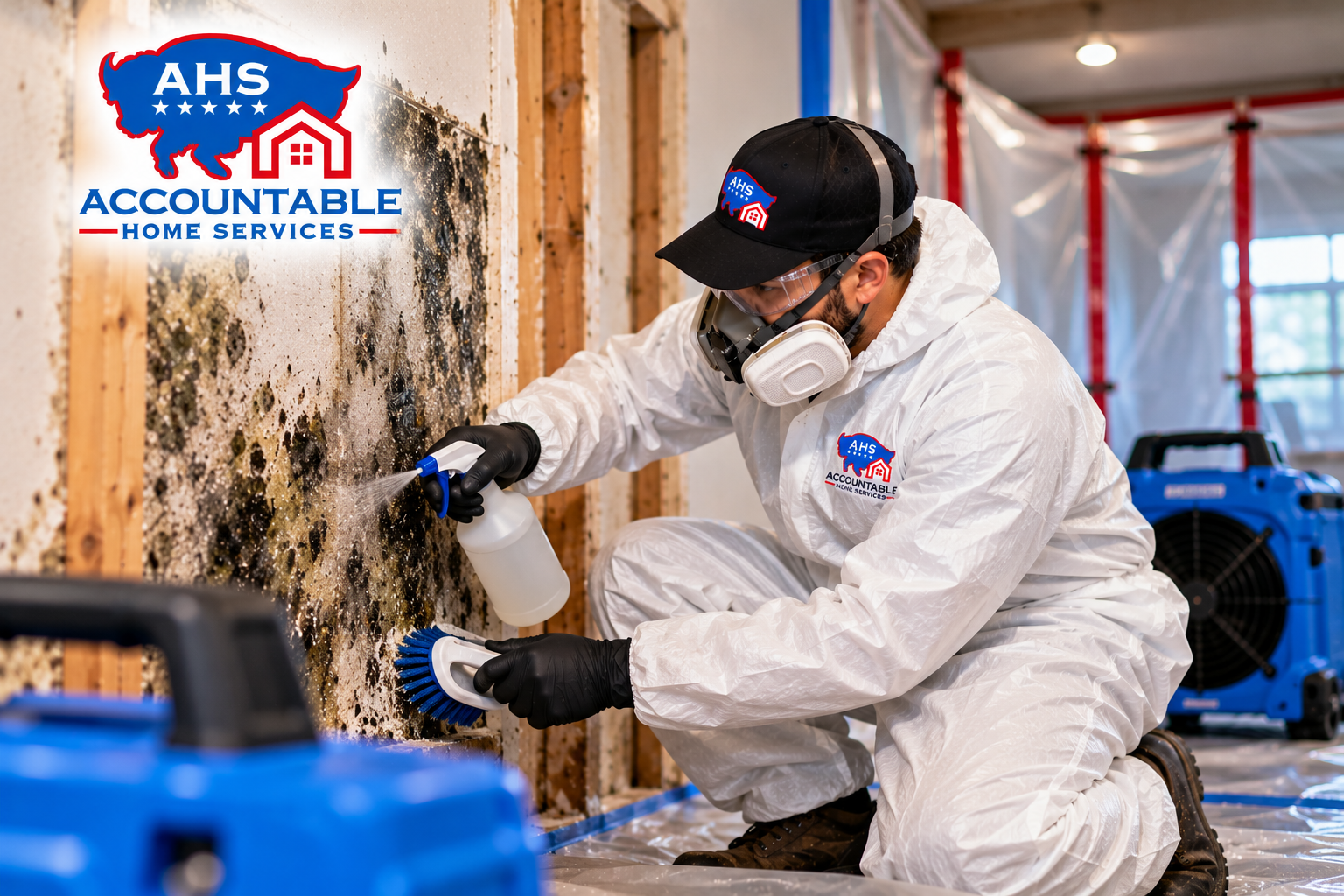
- Mold remediation if growth is confirmed (separate scope)
EPA flood cleanup guidance emphasizes removing water-damaged items and thoroughly drying to protect indoor air quality.
Checklist: how to compare two basement cleanup estimates
A good estimate is defined by clear boundaries and verification, not by the shortest equipment list.
Use this checklist:
- Does it define the affected boundary (which rooms/materials are included)?
- Does it specify equipment quantity and expected days?
- Are monitoring visits listed (how often readings are taken)?
- Does it explain how “dry” will be verified (readings/targets, not just “fans”)?
- Is there a plan for hidden edges (baseboards, toe-kicks, flooring transitions)?
- Are exclusions clearly listed (repairs, flooring, cabinetry, contents)?
- If water might be dirty/unknown, are safety/disposal steps described?
Common mistakes that raise the final cost
Most cost creep comes from moisture or contamination being underestimated early.
Red flags
- Pump-out only, with no plan for drying wall bottoms and flooring edges
- Equipment removed early because “it looks dry” (without verification)
- Repairs scheduled before drying is confirmed
- Wet cardboard and fabric bins left on the floor (they keep wicking moisture)
- Ignoring cabinet toe-kicks and under-stair storage pockets
FEMA’s mold guidance highlights the importance of drying and removing water-damaged materials to prevent mold problems.

Two realistic basement scenarios (how scope changes the cost)
Scenario 1: Clean-water seepage with shallow pooling and limited absorption
Water is removed, then drying focuses on the slab surface, wall bottoms, and any damp stored items. Costs are driven by equipment time (days) and monitoring, and whether porous materials like carpet padding or drywall edges absorbed water.
Relevant internal references:
Scenario 2: Unknown-source water with storage saturation and wall-bottom wetness
If water is dirty/unknown, the scope may require more protective measures, disposal of wet porous items, and more thorough sanitizing. Costs are driven by safety requirements, contents handling, selective removal for access, and verification before repairs.
Relevant internal references:
- Sewage/contamination scope (separate intent)
- Stabilization
Frequently Asked Questions
Is pumping out the basement enough?
Often no. Pump-out removes standing water, but absorbed moisture in wall bottoms, flooring edges, and contents can remain. Drying and verification determine whether the job is actually complete.
Why does a “small” basement flood sometimes cost a lot?
Because moisture may be in layers (padding, drywall paper, toe-kicks) and because equipment days and monitoring visits can add up when hidden spread is present.
How do I know if the water is contaminated?
If the source is unknown, near drains, smells foul, or contains debris, treat it as potentially contaminated and prioritize safety. (CDC)
Should repairs start right away?
Repairs generally start after drying is verified—rebuilding over damp materials can lead to repeat damage.