BLOG
Sewage Backup Cleanup Cost in Denver: Why It’s More Expensive (and What’s Included)

This guide answers one question: What drives the cost of sewage backup cleanup in Denver, and what should be included in a proper scope?
Not covered: general flooded-basement cost (clean/gray water), full-home water restoration cost, or step-by-step emergency response. This is specifically about sewage/black-water situations.
For the canonical overview of the overall water damage restoration workflow (assessment → drying → documentation), use: Accountable Home Services.com
Safety note: Sewage-contaminated water can carry health risks. Avoid direct contact and keep children/pets away from affected areas. (CDC)
External standards reference commonly used in the industry for water-damage categories and professional procedures:
Why is sewage cleanup usually more expensive than “regular” water damage cleanup?
Sewage cleanup costs more because the scope is not just “dry the area.” It typically requires higher safety precautions, containment, more aggressive cleaning/sanitizing, and removal/disposal of porous materials that can’t be safely decontaminated.
In other words, the cost difference is driven by risk management and material removal, not just equipment time.
What’s included in a proper sewage cleanup scope?
A proper sewage cleanup scope is usually built around four buckets: safety/containment, removal, cleaning/sanitizing, and drying + verification.
Internal service references (kept informational):
- Sewage cleanup scope
- Standing water removal
- Stabilization/mitigation
- Structural drying + monitoring
- Dehumidification
What are the biggest cost drivers for sewage cleanup?
Sewage cleanup estimates vary most based on how far contamination spread, how much porous material must be removed, and how much cleaning/verification is required before repairs.
Sewage cleanup cost-driver table
| Cost driver | Why it increases scope | What it looks like on-site | What to ask on an estimate |
|---|---|---|---|
| Spread area (square footage + rooms) | More labor, more containment, more cleaning | Multiple rooms, hallway spread, stair spread | What is the included boundary for contaminated areas? |
| Depth/volume of sewage | Removal and cleaning intensity rise with volume | Pooling, soaked contents, saturated carpet | Is this pump-out or extraction plus disposal, or surface cleaning only? |
| Porous materials affected | Many porous items can’t be safely decontaminated | Carpet padding, insulation, drywall bottoms, fabric contents | Which materials are being removed versus cleaned, and why? |
| Contact time | Longer contact increases wicking and saturation | Materials stayed wet for hours or days | How does time since the loss change removal needs? |
| Hidden spread (under floors / behind walls) | Requires mapping, access work, and more verification | Wet baseboards, toe-kicks, flooring edges | How will you confirm contamination didn’t travel under or behind finishes? |
| Containment requirements | Prevents cross-contamination to clean areas | Plastic barriers, controlled pathways, HEPA or negative air (as applicable) | What containment is included to protect unaffected rooms? |
| Disposal + hauling | Bagging, hauling, and disposal fees add up | Removed carpet and pad, drywall, insulation | What disposal or hauling is included, and what’s excluded? |
| Verification and post-cleaning checks | Prevents premature rebuild and repeat issues | Moisture checks, cleaning verification steps | What defines clean and dry enough to begin repairs? |
CDC notes floodwater can contain sewage and other hazards, and recommends precautions during cleanup.
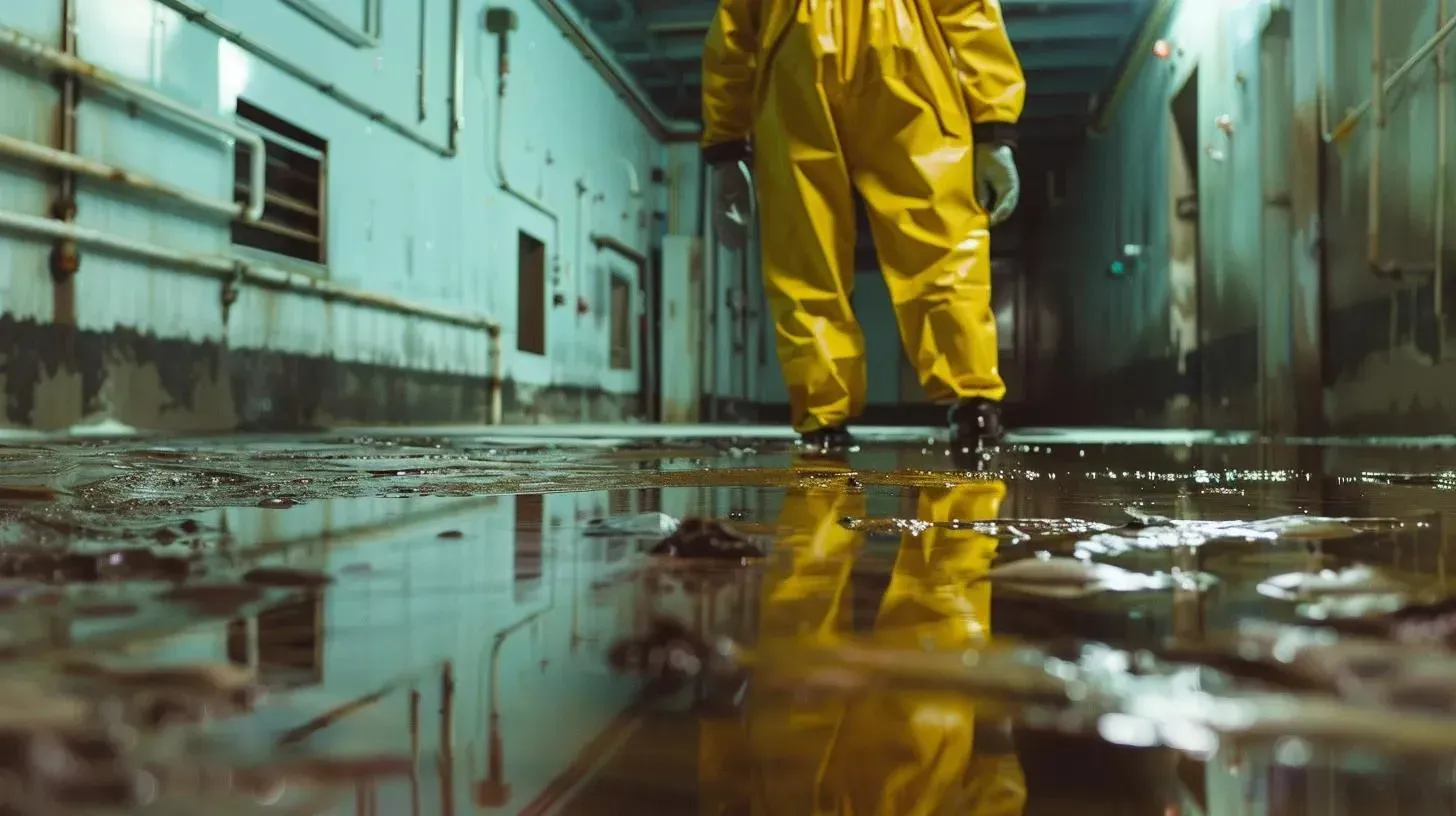
What’s usually included vs excluded in sewage cleanup pricing?
Many homeowners expect “cleanup” to include everything through rebuilding. In practice, cleanup/sanitizing and drying are often priced separately from repairs/rebuild, because it’s safer to verify conditions before reconstruction.
Often included
- Contaminated water removal / extraction (when present)
- Basic containment to limit cross-contamination
- Removal and disposal of affected porous materials (as required by scope)
- Cleaning and sanitizing of affected hard surfaces (appropriate products/procedures)
- Drying setup and humidity control for affected structural areas
- Monitoring and moisture verification during dry-down
Often excluded or priced separately
- Rebuild/repairs (drywall replacement, baseboards, flooring installation, paint)
- Specialty trades (electrical repairs, cabinetry rebuild)
- Contents restoration for furniture/textiles unless explicitly included
- Mold remediation if growth is confirmed later (separate intent)
If mold growth is present, keep remediation-specific guidance separate.
Checklist: how to compare two sewage cleanup estimates
With sewage, the lowest number isn’t always the safest scope. Compare the estimate by containment, removal decisions, and verification, not just equipment counts.
- Does it define the contaminated boundary (rooms/materials included)?
- Does it describe containment steps to prevent cross-contamination?
- Does it clearly list what porous materials will be removed (carpet pad, drywall bottoms, insulation) and why?
- Are disposal/hauling line items included and clear?
- Does it specify cleaning/sanitizing scope (hard surfaces vs contents)?
- Is there a plan for drying + verification before repairs begin?
- Are exclusions explicit (repairs, cabinets, contents, flooring replacement)?
Common mistakes and red flags in sewage cleanups
Most bad outcomes come from under-scoping removal, skipping containment, or rebuilding too early.
Red flags
- “We’ll just spray and dry” with no mention of containment or porous-material removal
- No plan to prevent tracking contamination into clean rooms
- Carpet padding or wet insulation left in place
- Repairs scheduled immediately without cleaning/drying verification
- No disposal plan for contaminated materials
Two realistic scenarios (how scope changes the cost)
Scenario 1: Small backup localized near a floor drain (limited spread)
The contaminated area is confined to a small section of basement floor. The scope may involve localized extraction, containment to protect the rest of the basement, removal of any affected porous materials at the edges, sanitizing hard surfaces, and a short controlled dry-down with verification.
Helpful internal references:
Scenario 2: Backup spread across carpeted basement with padding saturation
Once padding is saturated, costs often rise because the scope shifts toward removal/disposal of carpet/padding, cleaning and sanitizing of subfloors and wall bottoms, more containment, and longer drying/monitoring. The main drivers are porous-material removal + containment + verification before rebuild.
Frequently Asked Questions
Is sewage cleanup the same as flooded basement cleanup?
Not necessarily. A basement can flood with relatively clean water, but sewage/backup water typically requires higher safety measures, sanitizing, and more removal of porous materials.
Why can’t you just dry sewage-contaminated carpet?
Because contamination can remain in porous layers (carpet backing, padding) even if it “dries.” A safe scope often requires removing affected porous materials rather than trying to salvage them.
Do I need drying equipment after sewage cleanup?
Often yes. After removal and cleaning, the structure may still be wet in wall bottoms, subfloors, or cavities. Controlled drying and verification help prevent repeat issues.
What’s the most important question to ask about a sewage estimate?
Ask: “What porous materials are being removed, what containment is used, and how do you verify it’s safe to rebuild?”