Basement Water Intrusion in Denver: How to Tell If It’s Seepage, a Plumbing Leak, or a Backup
This guide helps you identify the most likely source of basement water intrusion by using visible clues (where the water appears, how it behaves, and what it looks/smells like). It’s designed for diagnosis and next-safe-step decisions.
Not covered: costs, full restoration timelines, or detailed emergency response steps. If you need the canonical overview of the full service workflow (assessment → drying → documentation), use Water Damage Restoration
Is basement water usually seepage, a leak, or a backup?
In practice, basement water most often comes from one of three buckets: groundwater seepage, a pressurized plumbing leak, or a drain/sewer backup. The fastest way to narrow it down is to look at where the water starts, whether it’s clean vs contaminated, and whether it gets worse during water use (showers, laundry, dishwasher).
What clues tell you it’s seepage (groundwater) versus a plumbing leak?
Seepage usually shows up as dampness at foundation edges (walls, cove joints, floor cracks) and tends to correlate with weather or saturated ground. A plumbing leak more often creates a localized wet zone near a fixture, supply line, or appliance and can worsen with indoor water use.
Here are the most useful differences:
- Seepage (groundwater) often appears:
- Along the wall-to-floor seam (“cove joint”)
- In corners or along a stretch of exterior wall
- After rain, snowmelt, or heavy ground saturation
- Plumbing leak often appears:
- Directly below a bathroom, laundry, kitchen line, or utility area
- As a single hotspot (one spot stays wetter than everything else)
- When someone uses water inside (shower/laundry)
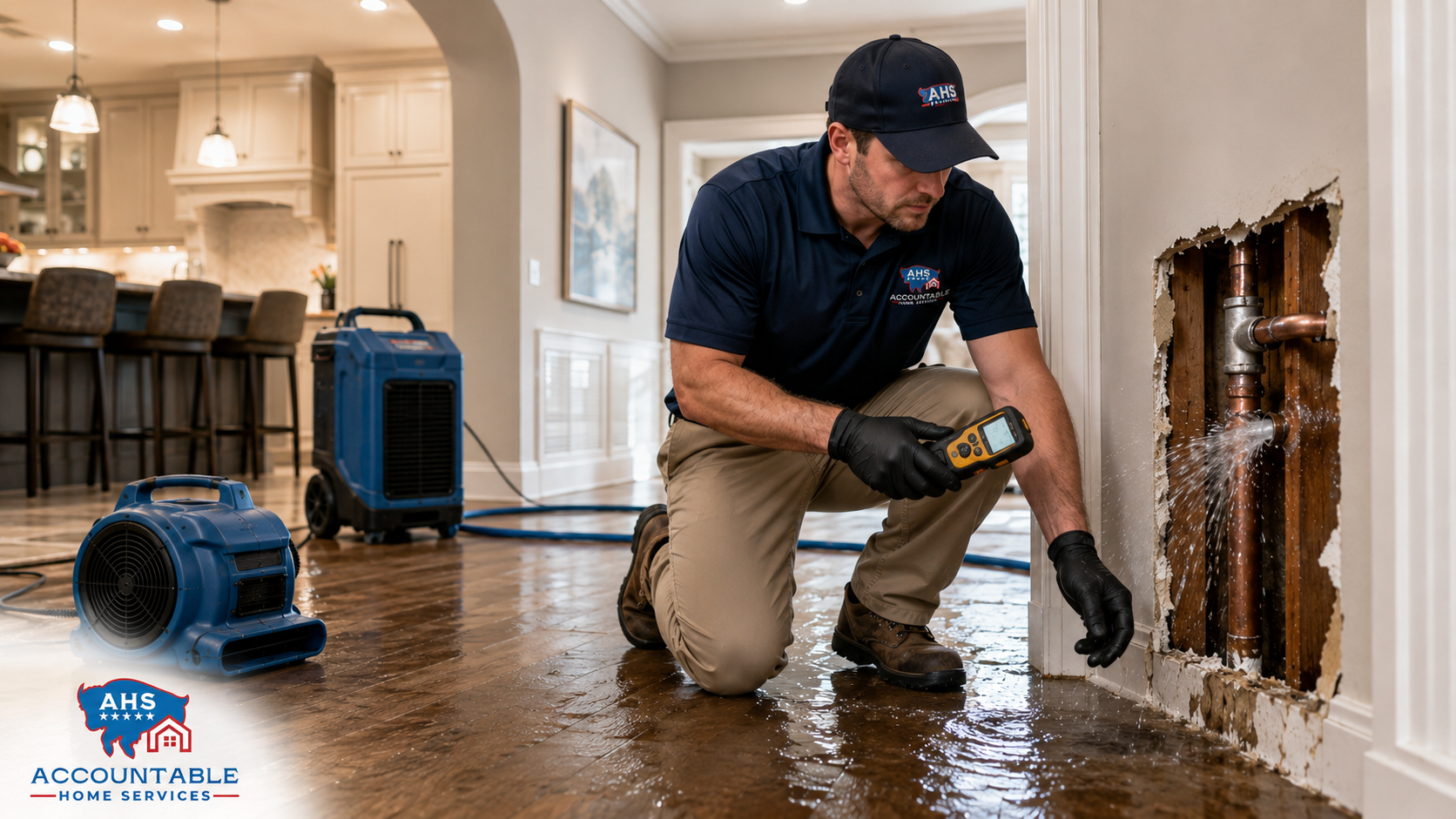
If the water source isn’t obvious, professional source identification belongs on leak detection
What clues suggest a drain or sewer backup?
A backup is more likely when water appears near floor drains, toilets, sump pits, or low plumbing fixtures, and the water looks dirty, smells foul, or contains debris. If you suspect contamination, prioritize safety and isolation.
Public health guidance treats floodwater/contaminated water as a safety risk and recommends avoiding direct contact and taking precautions during cleanup.
If you suspect sewage or Category-3 contamination, use this internal reference (and avoid DIY): Sewage Cleanup
Where should you look first to narrow the cause (without tearing anything apart)?
A good first pass is a three-zone scan: edges, plumbing zones, and drains. You’re not proving the cause—you’re identifying the most likely bucket.
12-point basement clue checklist
- Is water concentrated at the wall-to-floor seam or along exterior walls?
- Is water coming through floor cracks or a single low spot?
- Is the wettest area directly under a bathroom/laundry/kitchen?
- Do you see wetness around a water heater, softener, or HVAC drain line?
- Does it worsen right after showers, laundry, or dishwasher runs?
- Is water pooling around a floor drain or near a toilet?
- Does the water look cloudy/dirty or contain particles?
- Is there a sewage odor?
- Are baseboards or lower drywall edges swollen near one zone?
- Are stored items wet only at the bottom edges (suggesting floor-level spread)?
- Is it worse after rain/snowmelt (suggesting seepage)?
- Is the wettest area near a sump or discharge point?
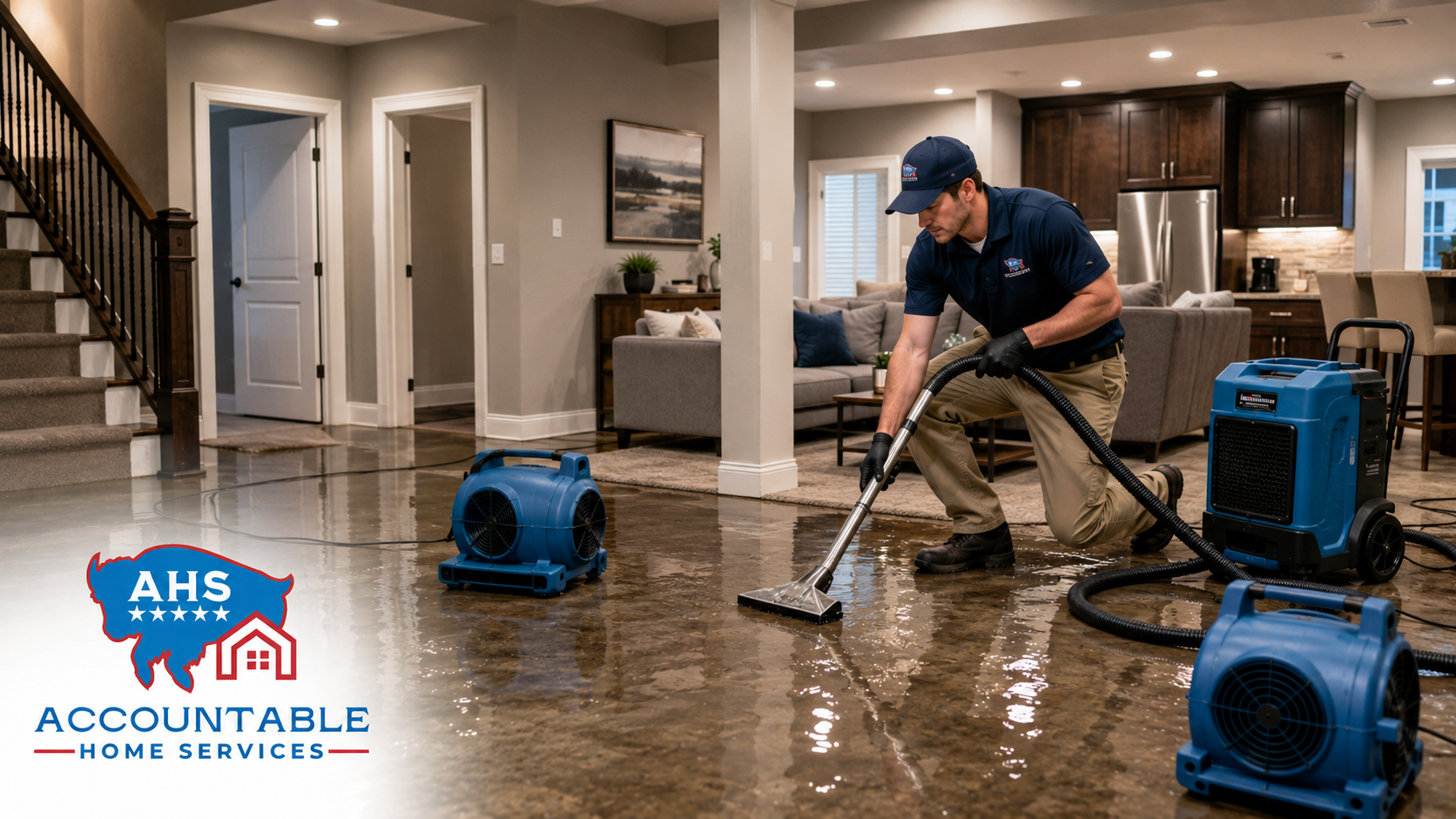
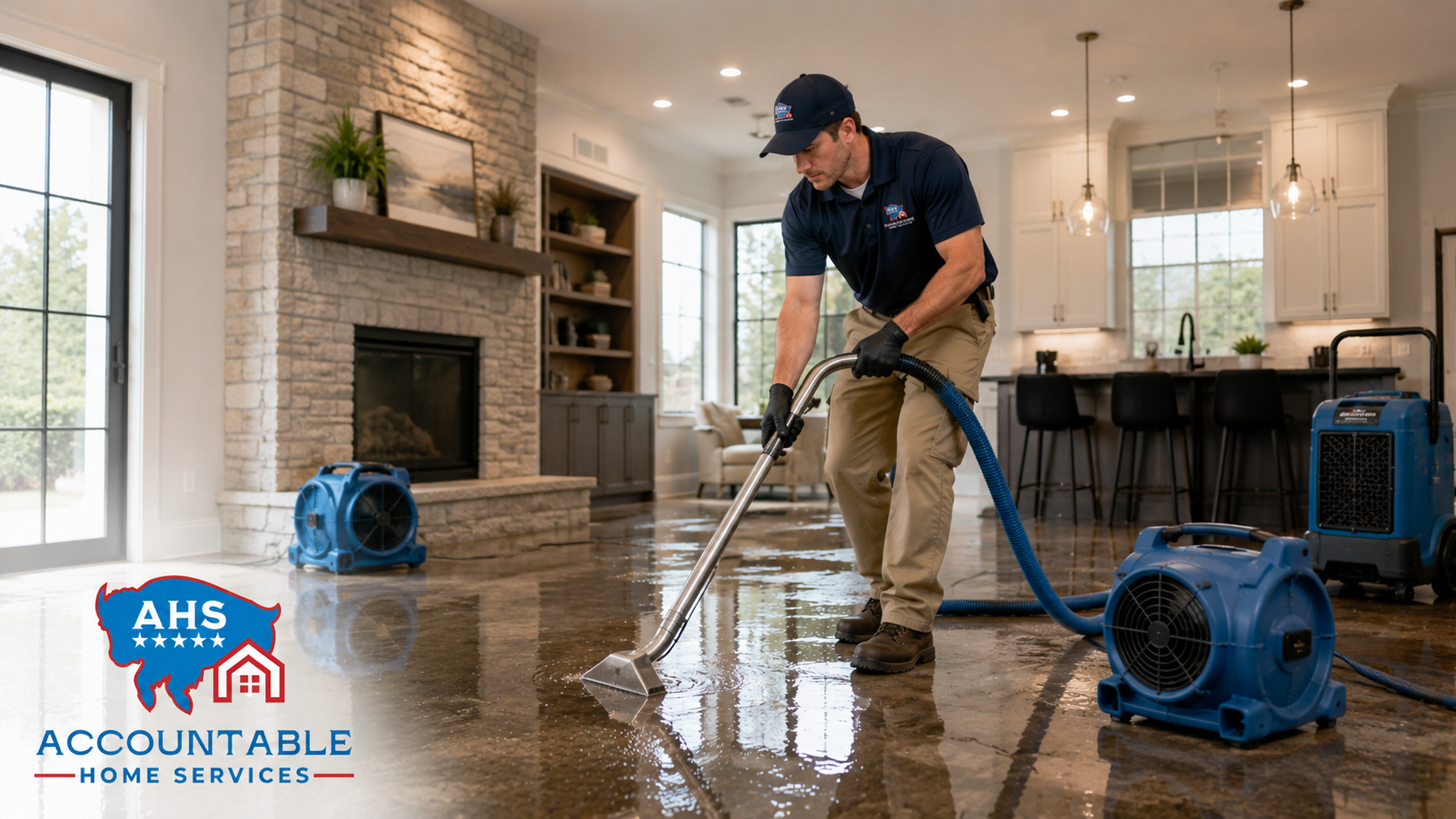
If there is visible standing water, removal is often the first practical step (once safety is confirmed). This scope aligns with: Water Extraction and Removal
Decision table: what your basement clues usually mean
Use this table to map symptoms to the most likely cause and a safe next step.
| What you’re noticing | Most likely bucket | Why it points there | Next safe step (no demolition) |
|---|---|---|---|
| Water appears along a long stretch of exterior wall seam after rain | Seepage (groundwater) | Ground saturation pushes moisture at edges or cove joints | Document, isolate contents, improve airflow; consider flood cleanup if widespread |
| A single hotspot near utility area (water heater/softener) | Plumbing leak | Pressurized lines create localized saturation | Shut off local valve if known; document; consider leak detection |
| Water increases during showers/laundry | Plumbing or drain issue | Indoor water use triggers the leak or overflow | Stop water use; document; leak detection if source isn’t obvious |
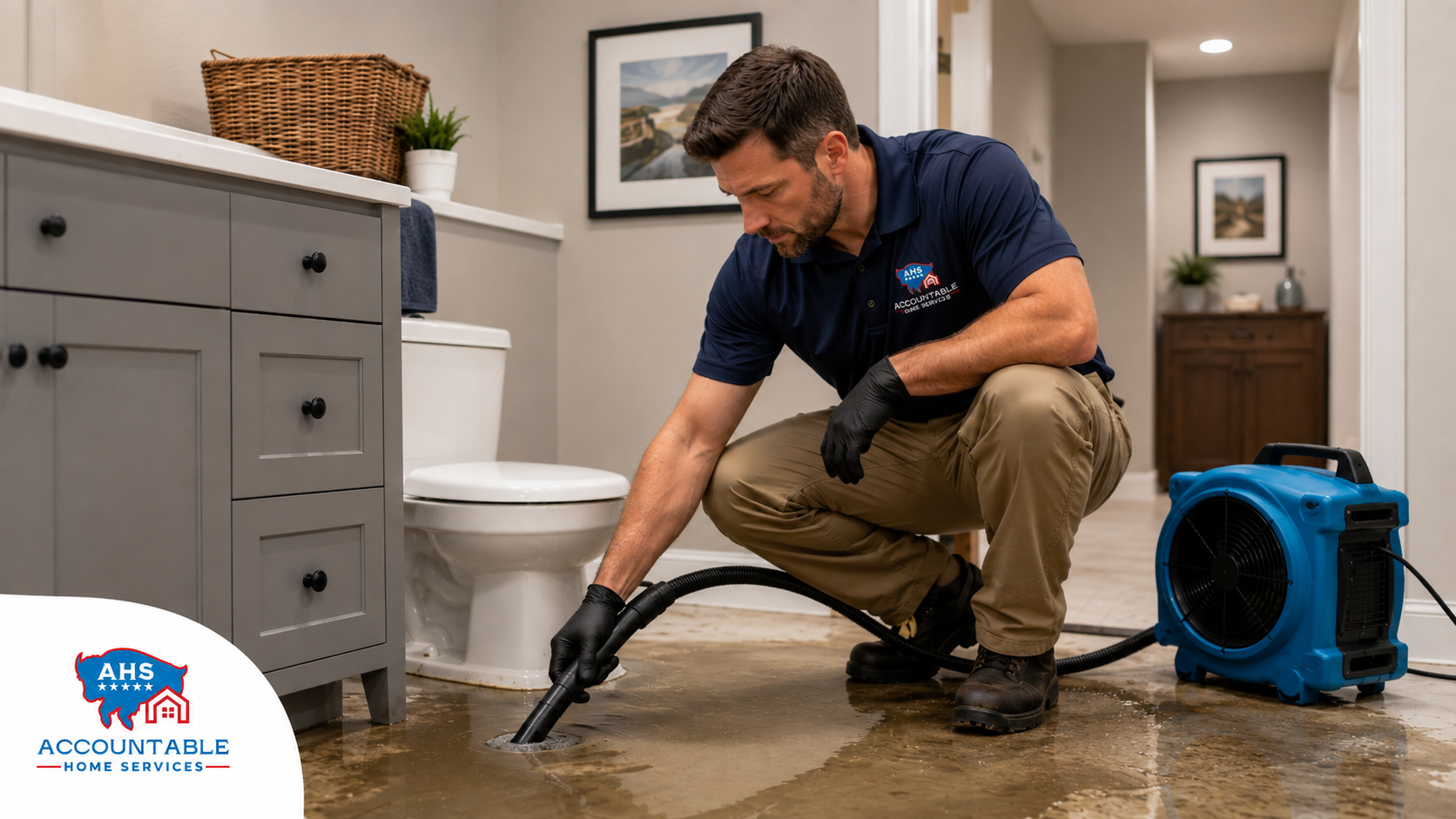
| Water is worst near a floor drain or toilet | Drain/backup | Lowest plumbing points show first | Treat as potentially contaminated; isolate area |
| Water is cloudy or dirty, strong odor, debris present | Sewer/contamination | Indicates waste or ground contamination | Avoid contact; use sewage cleanup resources |
| Basement is damp overall (no single hotspot), musty smell | Seepage or persistent humidity | Ongoing moisture load rather than a single burst | Improve airflow and humidity control; if materials are wet, plan structural drying |
Internal pages that match scopes (kept separate from this diagnostic guide):
- Flood cleanup scope
- Structural drying scope
- Dehumidification scope
What not to do when you don’t know the source yet
When the source is unclear, the biggest mistakes are doing actions that spread contamination or trap moisture.
Common mistakes / red flags
- Treating questionable water as “clean.” If it could be drain/backup/ground-influenced, avoid direct contact. (CDC floodwater safety)
- Randomly opening walls or pulling finishes to “see what’s wet.” It often increases mess and doesn’t confirm cause.
- Starting repairs before drying is verified. Rebuilding over damp materials can cause repeat damage.
- Leaving porous items in place (cardboard boxes, fabric bins) where they keep wicking water.
For general flood readiness and cleanup considerations, a government overview is here.
Two mini-scenarios (how to interpret the pattern)
Scenario 1: Water shows up after storms, mostly along one exterior wall
The wetness is strongest at the wall-to-floor seam and spreads slowly across the slab. There’s no single hotspot near plumbing. This pattern usually points to seepage/groundwater influence. The practical next step is to protect contents, document the boundary, and plan drying if materials absorbed water. If it’s more than a light damp area,
flood cleanup is the right scope.
Scenario 2: A wet zone appears near the utility corner after laundry runs
The area near the washer/utility sink is consistently wetter right after indoor water use. This points to a supply/drain issue more than seepage. If you can’t see the source,
leak detection is the cleanest next step.
Frequently Asked Questions
Can seepage happen without visible cracks?
Yes. Water can intrude at seams, small gaps, or porous materials even when cracks aren’t obvious.
If the water looks clear, is it safe?
Not always. Clear water can still be unsafe depending on where it came from. If the source is unknown or near drains/backups, treat it cautiously. (CDC floodwater safety)
What if I don’t see standing water but the basement smells musty?
That often suggests persistent dampness or humidity. If materials are wet, structural drying and humidity control may be needed.
Should I bleach basement water?
Avoid default “bleach everything” approaches, especially if you don’t know the water category and you have porous materials. Focus first on identifying the source and drying/cleaning safely.