Water Damage Restoration Cost in Denver: What Impacts Price (and What’s Usually Included)

This guide answers one question: What affects the cost of water damage restoration in Denver, and what is typically included versus excluded in an estimate?
Not covered: emergency first-hour steps, incident-specific playbooks, or a full restoration timeline. For the canonical overview of the service workflow (assessment → drying → documentation), use: Accountable Home Services
Important note: Pricing varies by home layout, water category/contamination, how far water traveled, and what materials must be removed/rebuilt. Any ranges below are general consumer guidance, not a quote.
External references used for general cost context and standards:
IICRC S500 standard overview (industry best practices)
How much does water damage restoration cost in Denver?
In Denver, consumer cost guides often frame water damage restoration in per-square-foot ranges and typical project ranges, with final pricing driven by the water category, affected area size, and how much drying and rebuilding is needed.
A practical way to read any “average” cost is: it’s usually describing a moderate loss, not the cheapest clean-water spill or the worst-case sewage/flood event.
What are you actually paying for in a water restoration estimate?
A restoration estimate is usually priced around four buckets: water removal, drying + humidity control, monitoring/verification, and cleanup/sanitizing (when appropriate). Repairs/rebuild may be separate.
Here’s how those buckets map to common scopes on your site (kept informational):
What factors push the price up or down the most?
Most price swings come from contamination level, materials affected, and how far water traveled into hidden layers.
Cost driver table (what changes the bill)
| Cost driver | Why it changes cost | What it looks like in a home | What to ask on an estimate |
|---|---|---|---|
| Water category / contamination | More safety steps, cleaning, disposal, and material removal | Backup water, dirty water, unknown source | How is the water categorized and what precautions or material removal does that require? |
| Square footage / number of rooms | More labor plus more equipment time | Water spread beyond one room | Which rooms are included in the drying boundary? |
| Materials affected | Some materials dry slowly or must be removed | Carpet padding, drywall paper, insulation, cabinets | Which materials are being dried versus removed, and why? |
| Hidden spread (under floors / behind walls) | Requires mapping, access, and longer monitoring | Wet baseboards, toe-kicks, flooring edges | How will you confirm what is wet behind or under surfaces? |
| Time since the loss | Delays can increase scope (odor, microbial risk, extra demolition) | Job starts days later | What changed because time passed? |
| Access constraints | Hard-to-reach areas require more time or targeted access | Built-ins, tight cabinets, dense flooring assemblies | What access is needed to dry correctly? |
| Monitoring and verification needs | Proper verification is labor and time dependent | Daily checks and equipment adjustments | What is the monitoring schedule and what readings define dry? |
The IICRC S500 is commonly referenced as an industry standard for professional water damage restoration procedures and precautions.
What’s usually included vs excluded in “restoration pricing”?
Many homeowners assume one number covers everything. In reality, mitigation/restoration work and rebuild/repairs may be separate line items or even separate contracts.
Included (often)
- Moisture assessment / boundary mapping
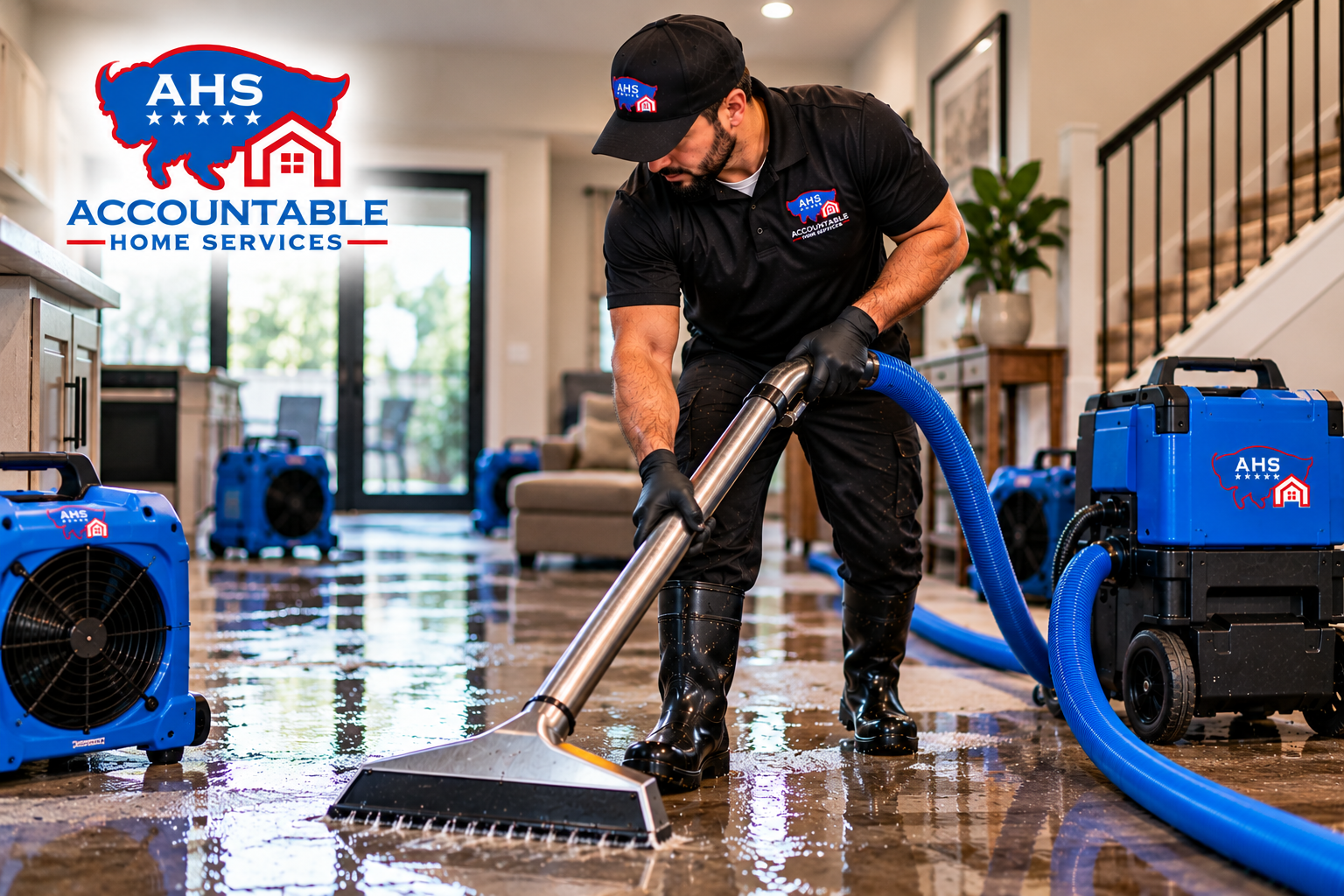
- Extraction of standing water (if present)
- Equipment setup (air movers, dehumidification)
- Monitoring visits and equipment adjustments
- Basic cleaning/sanitizing steps appropriate to the water source
Often excluded (or priced separately)
- Major rebuild (drywall replacement, paint, flooring replacement, cabinets)
- Specialty trades (cabinetry, finish carpentry, tile, electrical repairs)
- Mold remediation beyond preventive measures (if growth is present)
- Contents restoration (furniture, textiles) unless specifically included
If mold growth is confirmed, keep remediation-specific guidance separate here.
How does insurance usually affect out-of-pocket cost?
Insurance can reduce out-of-pocket cost for covered losses, but the result depends on your policy, deductible, cause of loss, and what’s documented. In practice, good documentation helps keep the claim file clean, while unclear boundaries or missing photos can slow approvals.
Helpful mindset for homeowners:
- Ask what’s included in the “drying boundary” (rooms/materials)
- Keep a simple timeline (discovery time, shutoffs, first actions)
- Save receipts for emergency supplies
Checklist: how to compare two estimates without getting stuck on the bottom-line number
Two estimates can have the same total but wildly different quality. Use this checklist to compare scope and verification.
- Do both estimates define which rooms/materials are included?
- Do they explain how moisture will be verified as dry (not just “we run fans”)?
- Is equipment listed with time on-site (days) and monitoring visits?
- Does the estimate state what is excluded (repairs, cabinets, flooring, contents)?
- Is there a clear plan for hidden moisture (under flooring, behind baseboards/toe-kicks)?
- If water is dirty/unknown, is there a clear safety and disposal scope?

Common mistakes that inflate the final cost
The most expensive water jobs are often the ones where moisture stays hidden or drying is stopped early.
Red flags
- “We’ll start repairs immediately” without a dryness verification plan
- A scope that focuses on visible surfaces but ignores flooring edges, toe-kicks, and lower wall zones
- Equipment removed early because “it feels dry”
- No written boundary for what was affected
Two realistic cost scenarios (how scope changes price)
Scenario 1: Clean-water supply leak in one room (limited spread)
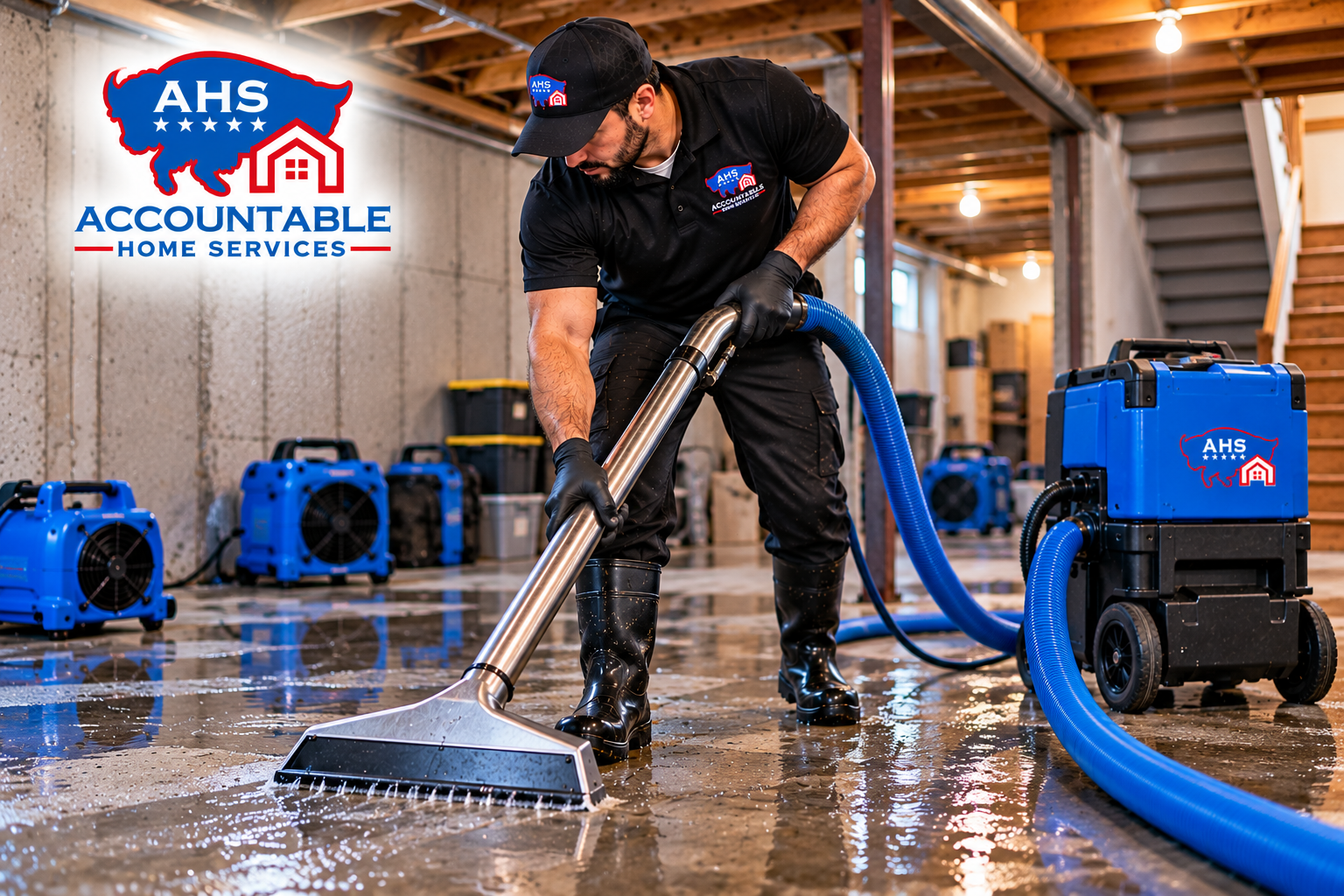
Standing water is removed, drying equipment runs for several days, and monitoring confirms the wall bottoms and floor layers are dry. Costs tend to be driven by equipment time and whether flooring or baseboards needed removal.
Related internal scopes:
Scenario 2: Water reached cabinets and spread under flooring edges
Even if the room “looks dry,” water under flooring and inside toe-kicks can extend drying time and increase labor for access and verification. Costs are often driven by hidden spread, monitoring cycles, and whether cabinets/flooring must be removed and later rebuilt.
Frequently Asked Questions
Is per-square-foot pricing reliable?
It’s useful as a rough context, but water jobs don’t scale perfectly by square feet because hidden spread, contamination category, and materials can change the scope dramatically.
Why do two companies give very different numbers?
Often it’s because the scope boundary is different (one includes more rooms/materials), the verification plan differs, or one anticipates hidden moisture and rebuild needs while the other doesn’t.
Does “mitigation” cost the same as “restoration”?
Not necessarily. Mitigation is often the stabilize-and-dry phase, while restoration can include return-to-normal work.