Frozen Pipes in Louisville, CO: What Homeowners Should Do Before and After a Pipe Bursts
Frozen Pipes in Louisville, CO: What Homeowners Should Do Before and After a Pipe Bursts
Frozen water pipes are a winter plumbing problem, but a burst pipe is also a water damage problem. In Louisville, CO, quick temperature drops, cold crawl spaces, exterior-wall plumbing, and vacant or under-heated properties can all raise the risk. This guide explains how to spot frozen pipes, what to do safely before a pipe bursts, and how AHS helps when water escapes into a home and creates damage that needs professional mitigation, drying, documentation, and restoration.
What should you do first if you suspect a frozen pipe?
If you suspect a frozen pipe, act calmly and check whether water is still flowing from nearby fixtures. A frozen pipe may not leak right away, but pressure can build between the frozen section and the faucet, which is why homeowners should reduce pressure, warm the area safely, and be ready to shut off the water if a leak starts. If water has already escaped into the home, stop the source if you can do so safely, call a plumber for the pipe repair, and call a water mitigation team like AHS to handle the wet materials and hidden moisture.
A common mistake is treating frozen pipes Louisville CO homeowners face as only a plumbing issue. Sometimes that is true: the pipe freezes, it thaws, and no water escapes. But once drywall, flooring, insulation, cabinets, framing, or contents get wet, the job changes. Plumbing frozen pipes requires a plumber; burst pipe water damage requires restoration work.
Warning signs of frozen water pipes
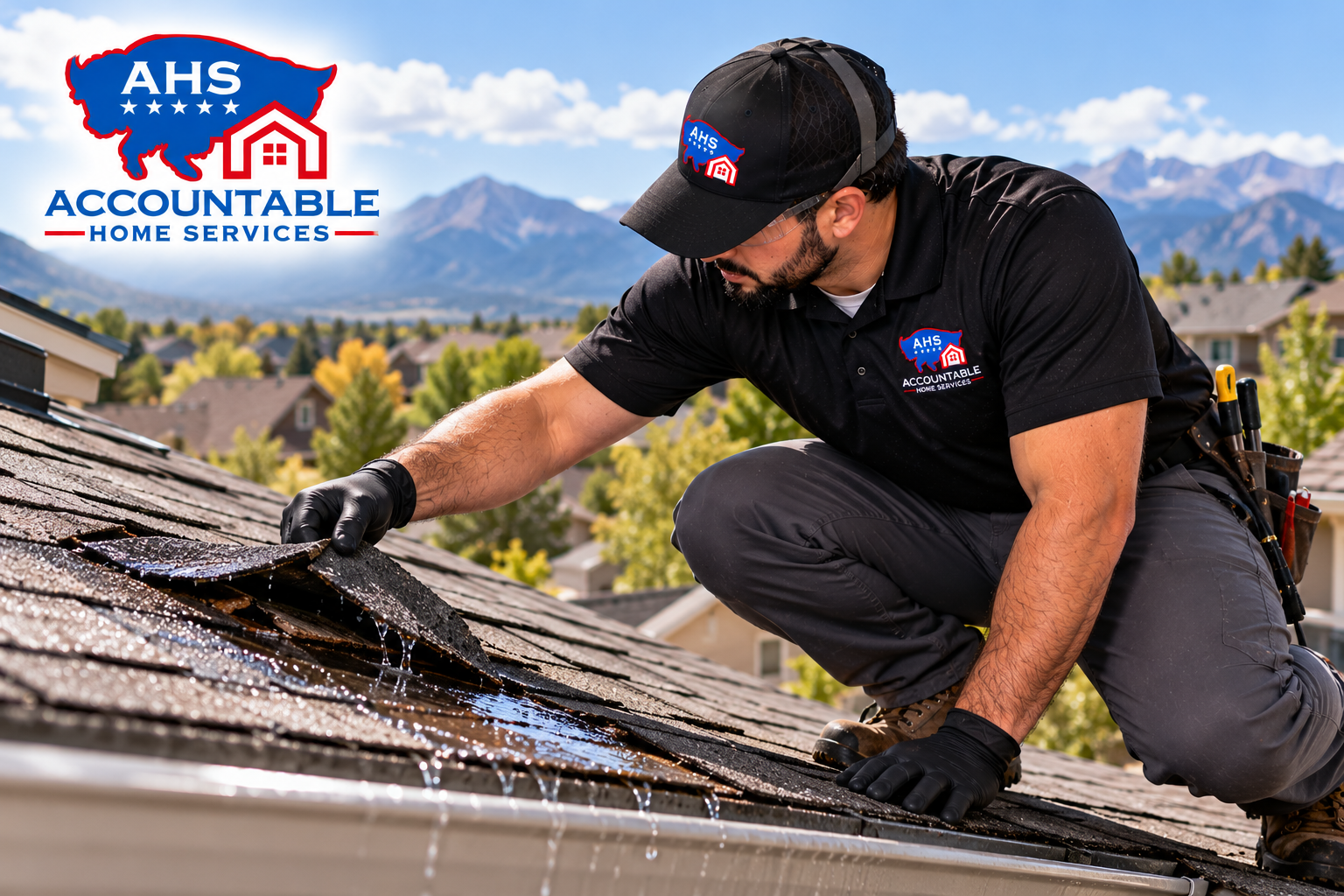
Frozen pipes are not always obvious at first. Some homeowners notice the issue when they turn on a faucet and only a trickle comes out. Others hear odd sounds in the wall or find a damp spot after the pipe has already split.
Look for these warning signs during cold snaps:
- No water or weak water flow from one faucet while other fixtures still work.
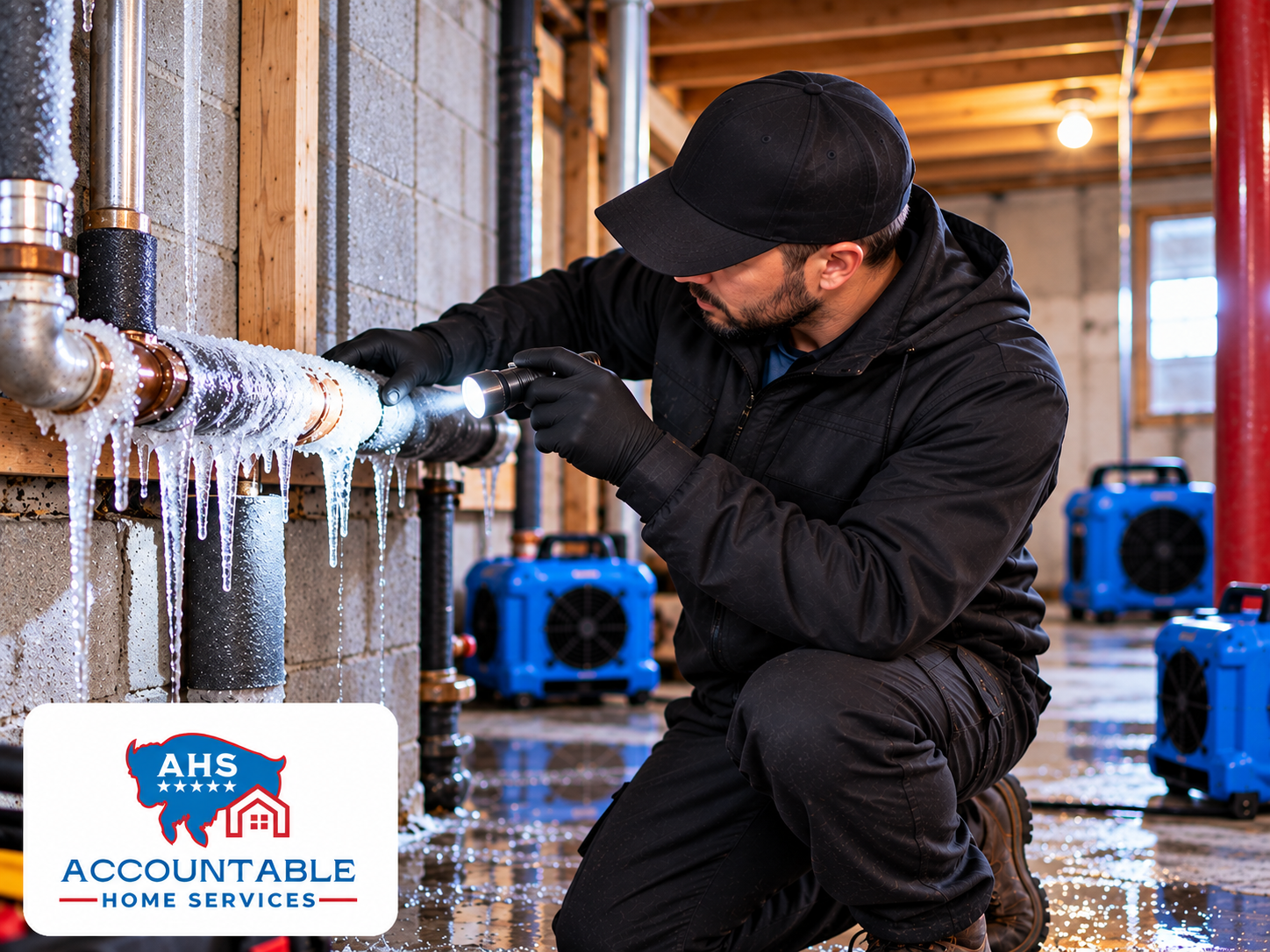
- Frost on exposed piping in a basement, crawl space, garage, cabinet, or utility area.
- Bulging or split pipe sections, especially on copper, PEX, or older supply lines.
- Unusual smells from drains, which may happen when a drain line is blocked by ice.
- Banging, whistling, or sputtering when a faucet is opened.
- Damp drywall, flooring, or ceiling stains near bathrooms, kitchens, laundry rooms, hose bibs, or exterior walls.
- A sudden pressure drop in part of the home.
In Colorado winter conditions, the vulnerable areas are often the places homeowners do not check every day: crawl spaces, unfinished basements, exterior hose connections, garage walls, under sinks on exterior walls, and vacant units where the thermostat was set too low.
Frozen pipe prevention before temperatures drop
The best frozen pipe repair is the one you never need. Frozen pipe prevention is mostly about keeping vulnerable plumbing warm, insulated, and monitored before the hard freeze arrives.
Homeowners, landlords, and property managers can reduce risk by taking a few practical steps:
- Disconnect exterior hoses. A connected hose can trap water and increase pressure inside an exterior hose bib.
- Insulate exposed pipes. Focus on garages, crawl spaces, basements, utility rooms, and exterior-wall plumbing.
- Seal cold air gaps. Small openings around rim joists, vents, wall penetrations, and garage areas can send freezing air directly toward pipes.
- Keep indoor heat consistent. Avoid large thermostat setbacks during severe cold, especially in vacant homes or rental units.
- Open cabinet doors. Under-sink plumbing on exterior walls benefits from warmer room air.
- Let a faucet drip when appropriate. A small flow of water can help reduce pressure in vulnerable lines during extreme cold.
- Know where the main shutoff is. Everyone responsible for the property should know how to turn off the water quickly.
For property managers, frozen pipe prevention also depends on communication. Tenants should know how to report weak water flow, no water, ceiling drips, or wet flooring right away. A small delay can turn a manageable emergency pipe leak into a larger water mitigation Louisville job.
Safe thawing dos and don’ts
If you believe a pipe is frozen but has not burst, start with safe warming methods. Open the faucet connected to the frozen line. This gives melting ice and built-up pressure somewhere to go. Then warm the pipe slowly from the faucet side toward the frozen section.
Do:
- Use warm air from a hair dryer if the area is dry and safe.
- Place warm towels around the pipe.
- Use a space heater only if it is approved for indoor use, kept away from combustibles, and monitored.
- Keep the faucet open while thawing.
- Watch for leaks as the pipe begins to thaw.
- Call a plumber if you cannot locate the frozen section or if the pipe is behind a wall.
Don’t:
- Do not use a torch, open flame, heat gun on high, charcoal heater, or propane heater near building materials.
- Do not cut into walls unless you know what is behind them.
- Do not ignore a thawed pipe just because water starts running again.
- Do not keep thawing if you see water leaking from the pipe or wall.
- Do not assume flooring, cabinets, or insulation are dry because the surface looks okay.
Safe thawing is about patience. Fast heat can damage the pipe, start a fire, or miss the real problem area. If the frozen line is inaccessible, repeated freezing has happened, or the pipe material appears cracked, bring in a plumber.
When should the water be shut off?
Shut off the water immediately if you see active leaking, hear water running when fixtures are off, notice a ceiling sagging or dripping, find wet flooring spreading, or suspect a pipe has split inside a wall or ceiling. If it is safe, use the main water shutoff for the property rather than only closing a fixture valve. Once water is off, avoid turning it back on until a plumber has inspected or repaired the damaged line.
If water is near electrical outlets, light fixtures, panels, or appliances, stay out of the area and avoid touching switches. Safety comes first. In a multi-unit property, notify the property manager or building contact right away because one burst pipe Louisville CO incident can affect neighboring units, shared walls, and common areas.
Plumbing repair and water damage restoration are different jobs
This distinction matters. A plumber repairs the source. A restoration company handles the damage caused by the water.
A plumber may:
- Locate the frozen or burst section of pipe.
- Stop the leak and make the frozen pipe repair.
- Replace damaged fittings, valves, or supply lines.
- Check pressure and restore safe water service.
- Advise on insulation, rerouting, or plumbing upgrades to prevent frozen pipes in the future.
A restoration company like AHS may:
- Extract standing water.
- Inspect affected rooms and building materials.
- Detect hidden moisture after pipe burst events.
- Remove unsalvageable wet materials when needed.
- Set drying equipment and monitor progress.
- Help prevent mold growth by drying materials properly.
- Document damage, moisture readings, equipment, and work performed.
- Support the homeowner, plumber, property manager, or insurance agent with clear communication.
Both roles matter. If the pipe is repaired but wet insulation stays inside a wall, the home can still have odor, staining, swelling, microbial growth, or structural material damage later. If restoration begins but the pipe is not repaired, the source may keep leaking. The best result usually comes from the plumber and restoration team working in the right order and communicating clearly.
What AHS does after water escapes into a home
AHS helps after water has entered living spaces, wall cavities, flooring systems, cabinets, ceilings, or other building materials. The goal is to reduce further damage, find wet areas that are not visible, dry the structure properly, and document the job clearly so the next steps are easier for the homeowner and any insurance professionals involved.
Water extraction
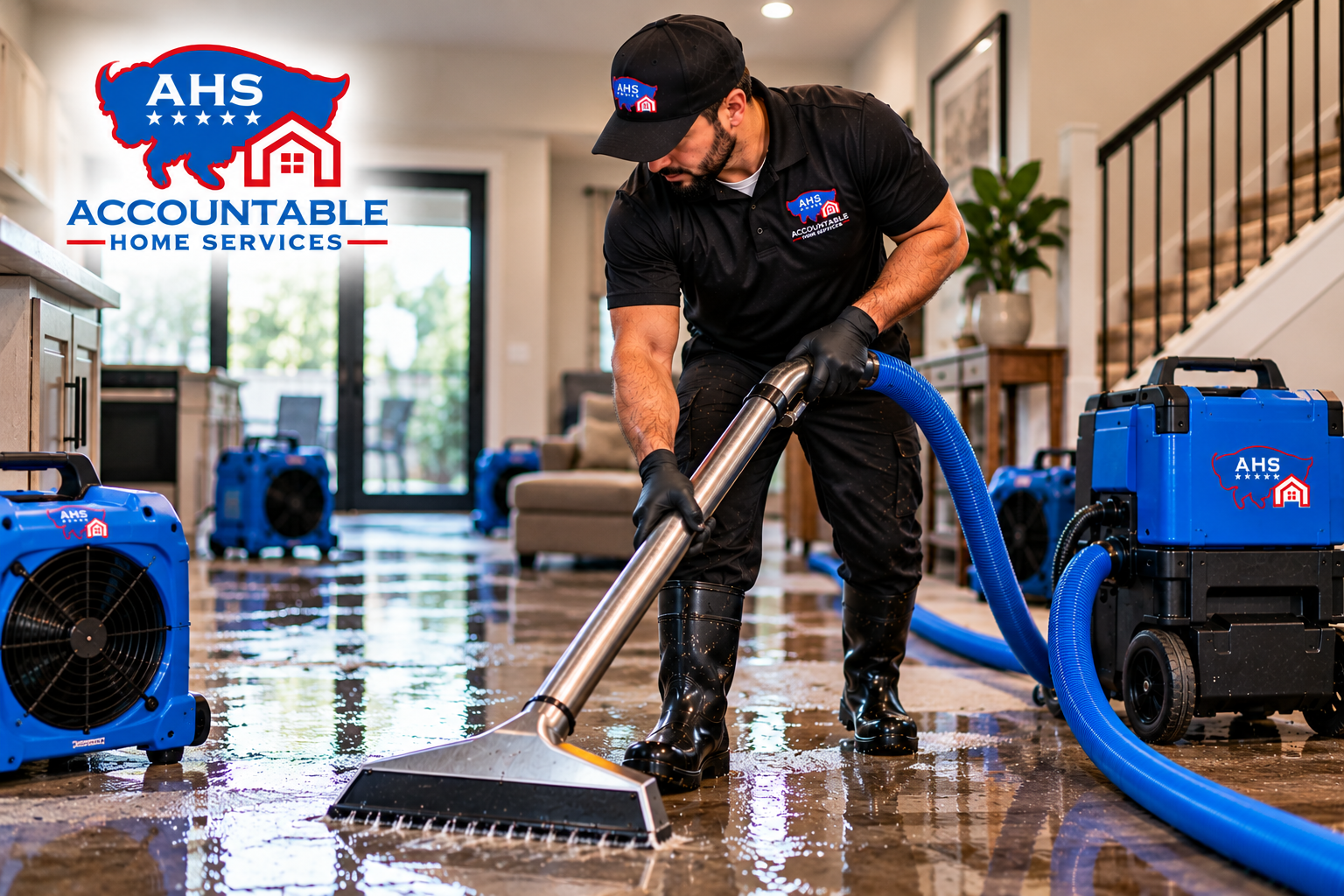
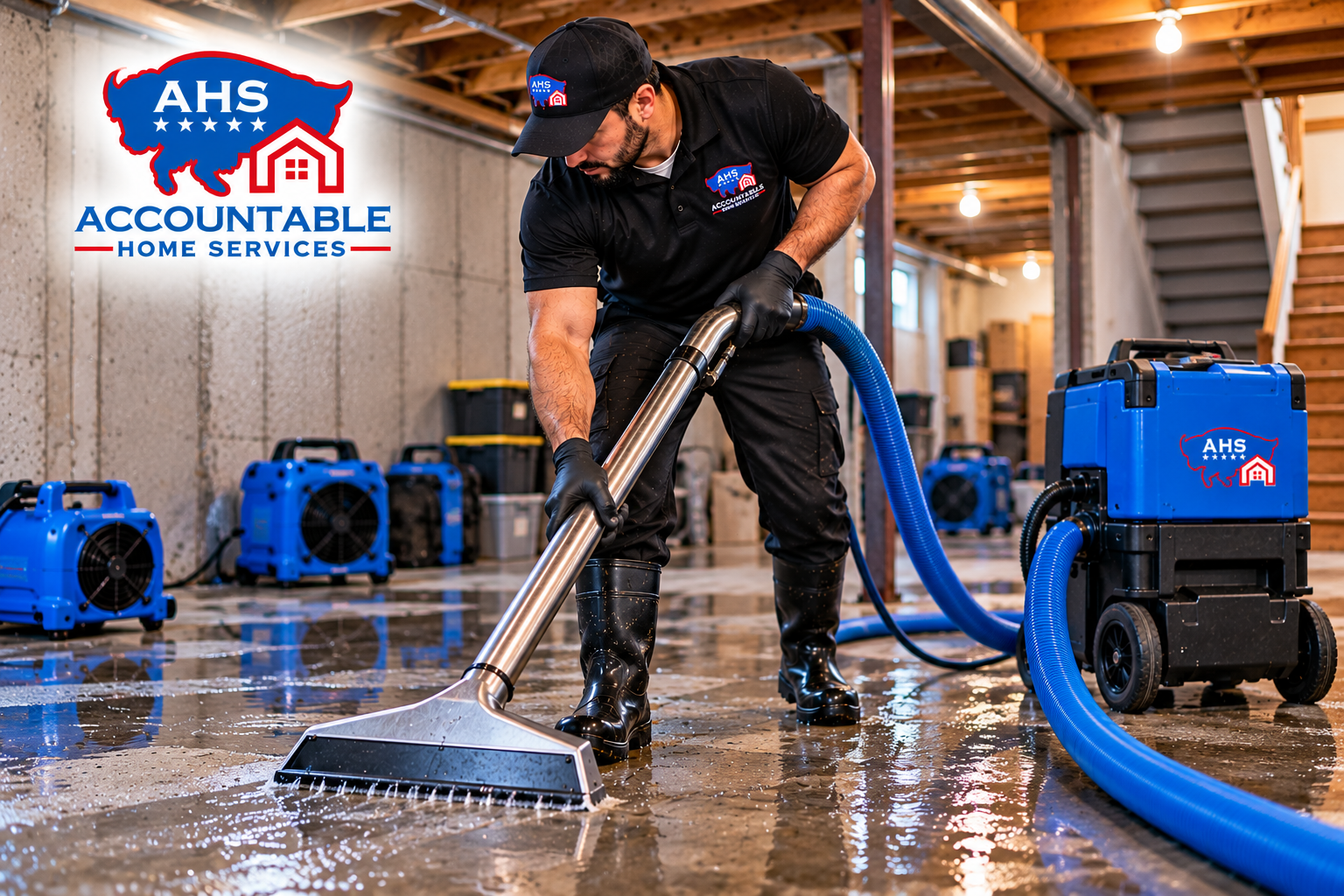
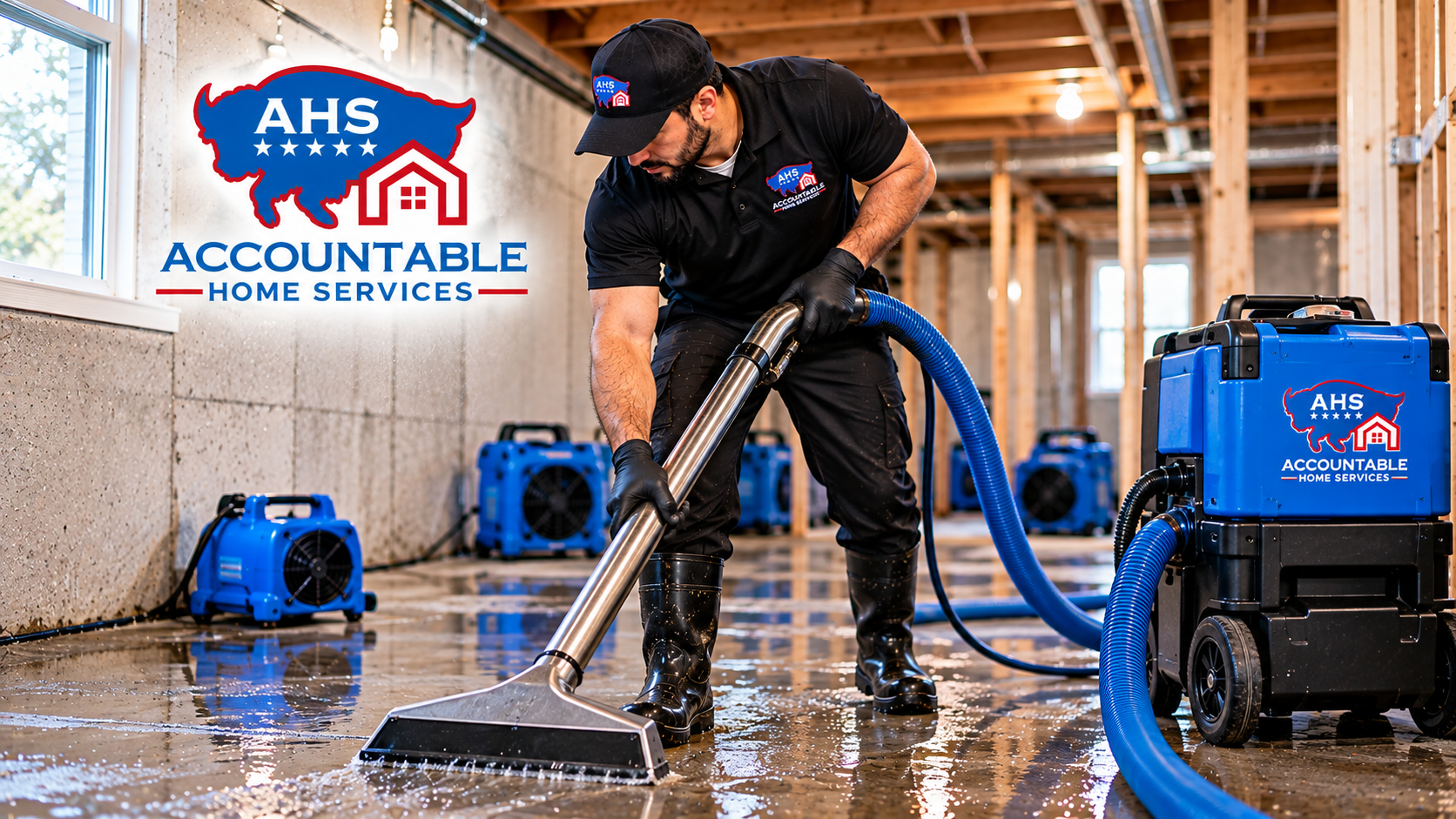
If there is standing water, extraction comes first. Removing water quickly helps limit how far it spreads under flooring, into baseboards, beneath cabinets, and through wall assemblies. Extraction is especially important after burst pipe water damage because supply lines can release a large amount of clean water in a short time.
Moisture detection
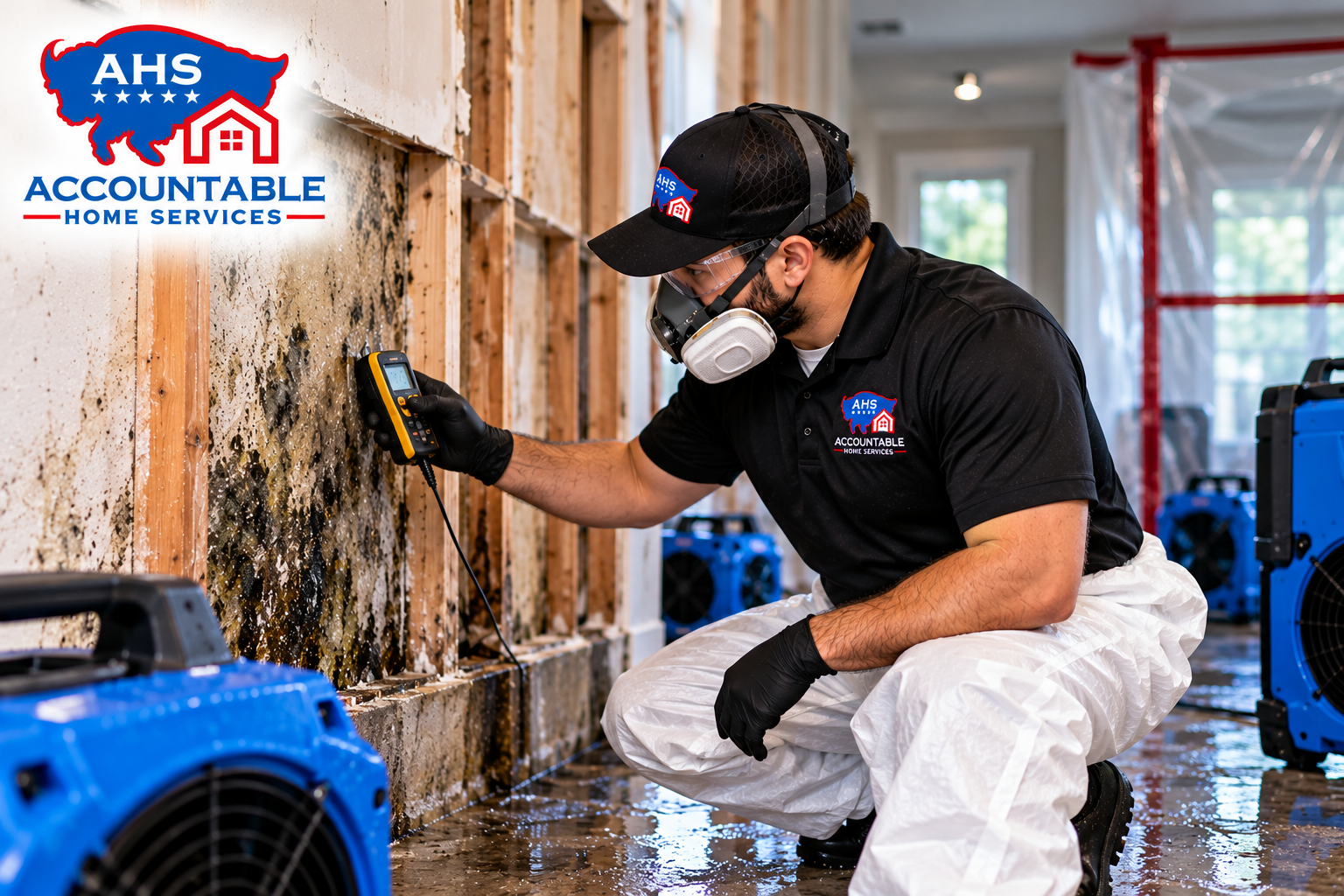
Water often travels farther than it looks. AHS checks for hidden moisture after pipe burst situations using moisture detection tools and hands-on inspection. This helps identify wet drywall, trim, subflooring, insulation, cabinets, and areas behind finished surfaces. The visible puddle is only part of the story.
Structural drying
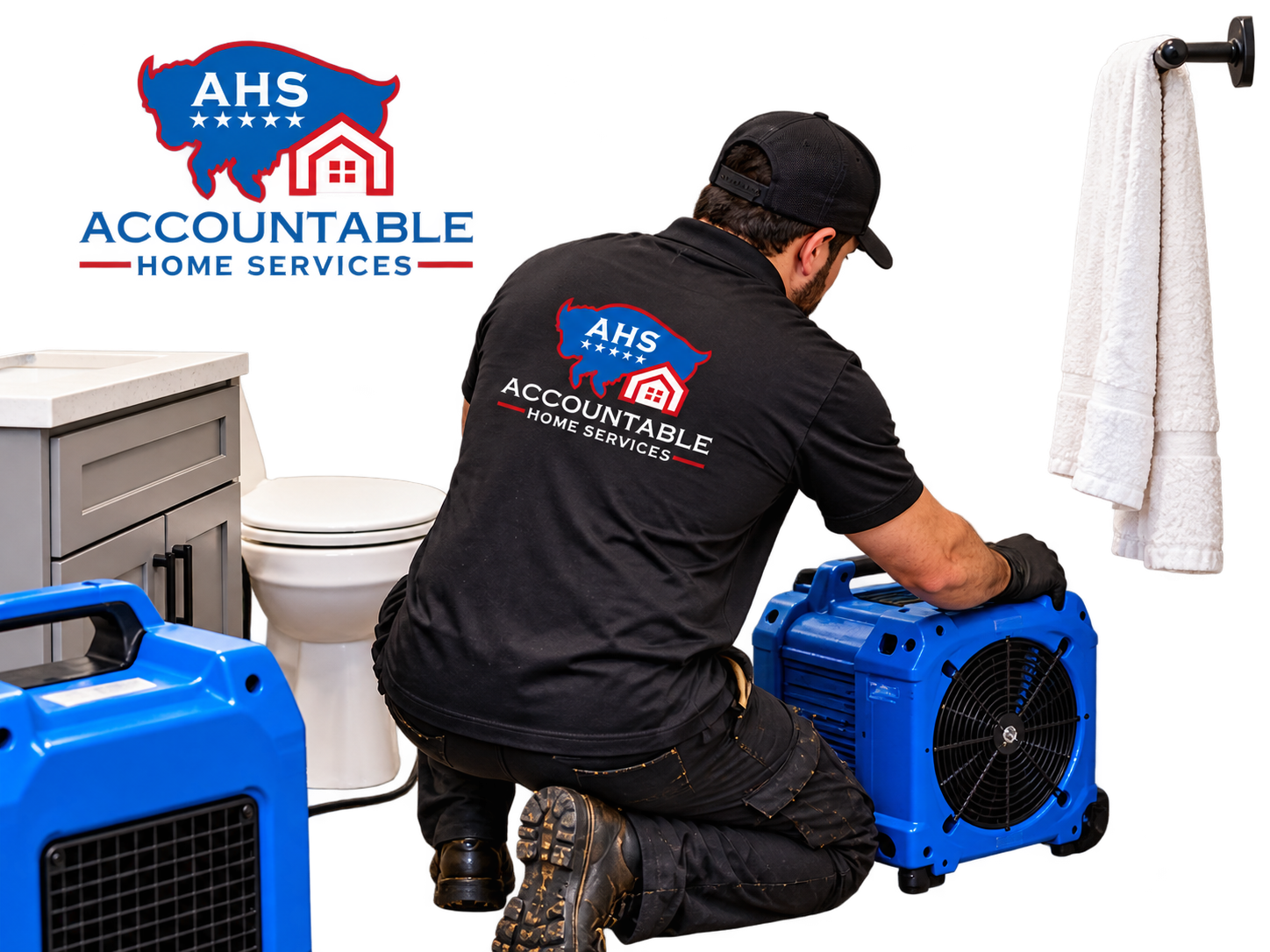
After extraction and inspection, drying equipment may be placed to move air and reduce moisture. Structural drying is not just “putting a fan on it.” The team monitors affected materials, adjusts equipment when needed, and works toward drying the structure in a controlled way.
Damaged-material removal
Some materials can dry in place. Others may need to be removed if they are saturated, damaged, contaminated, or blocking access to wet areas. This may include sections of drywall, wet insulation, swollen baseboards, ruined flooring, or damaged cabinet materials. Removing the right materials at the right time can make drying more effective and help prevent bigger problems.
Mold prevention
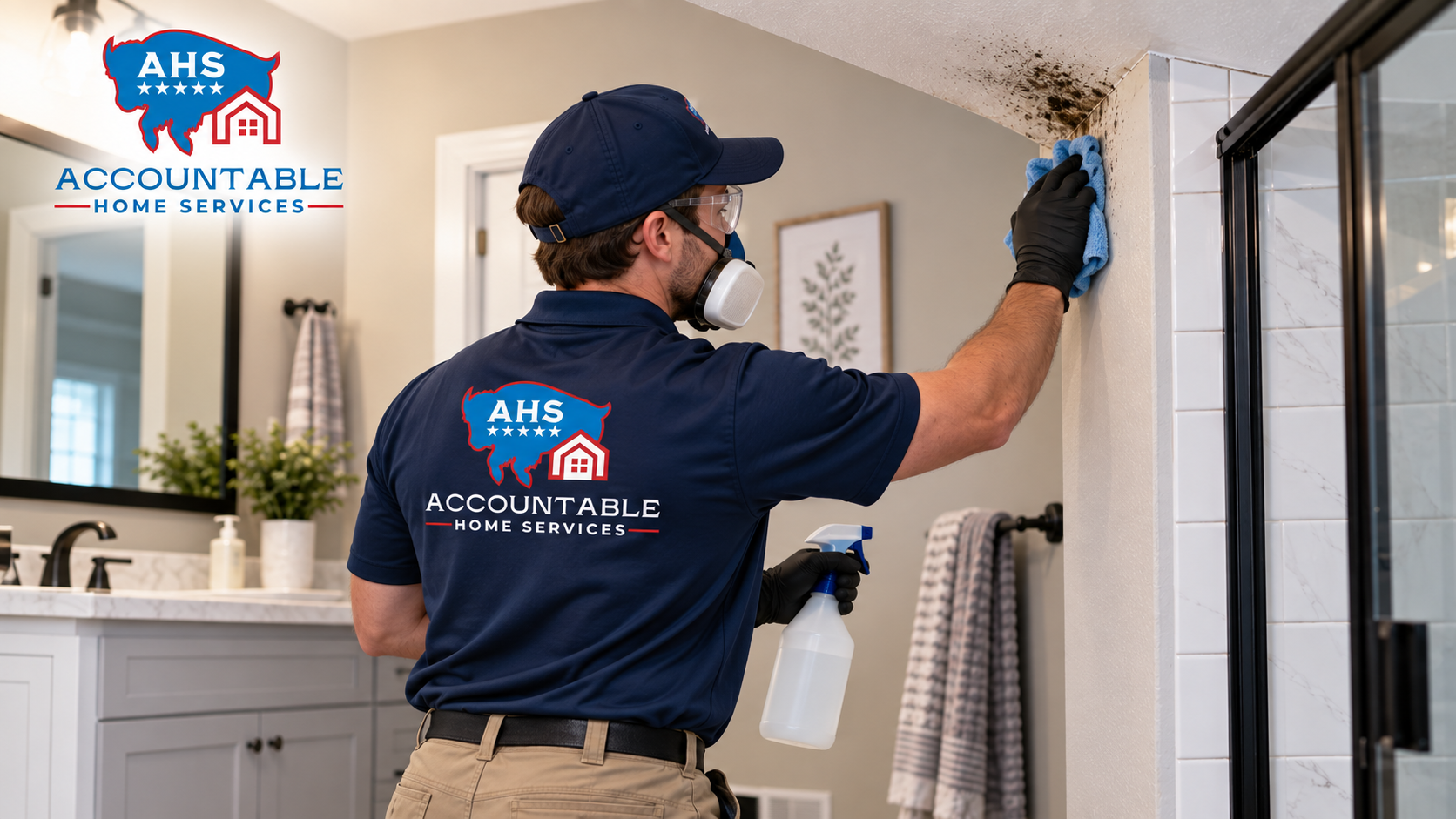
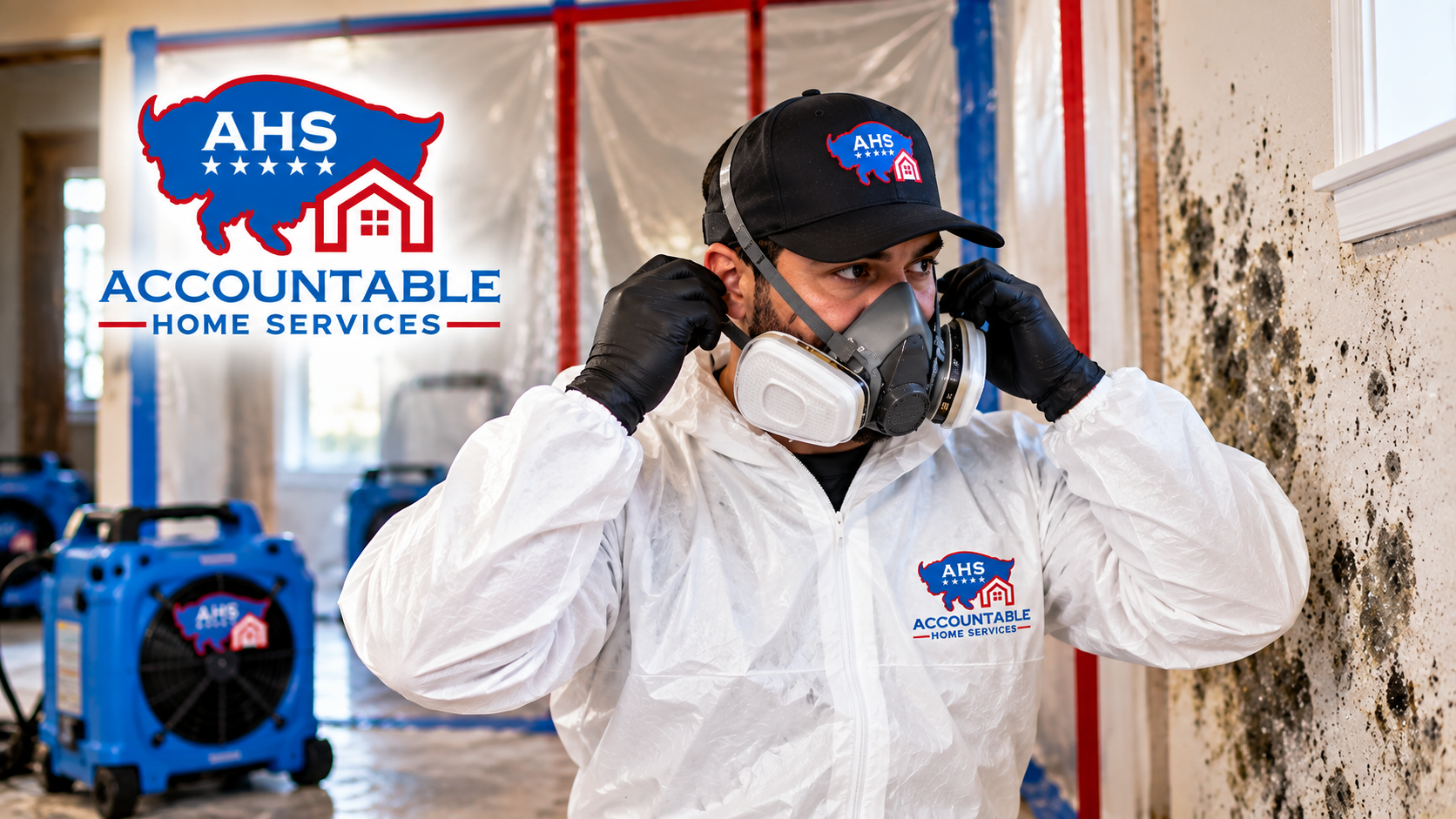
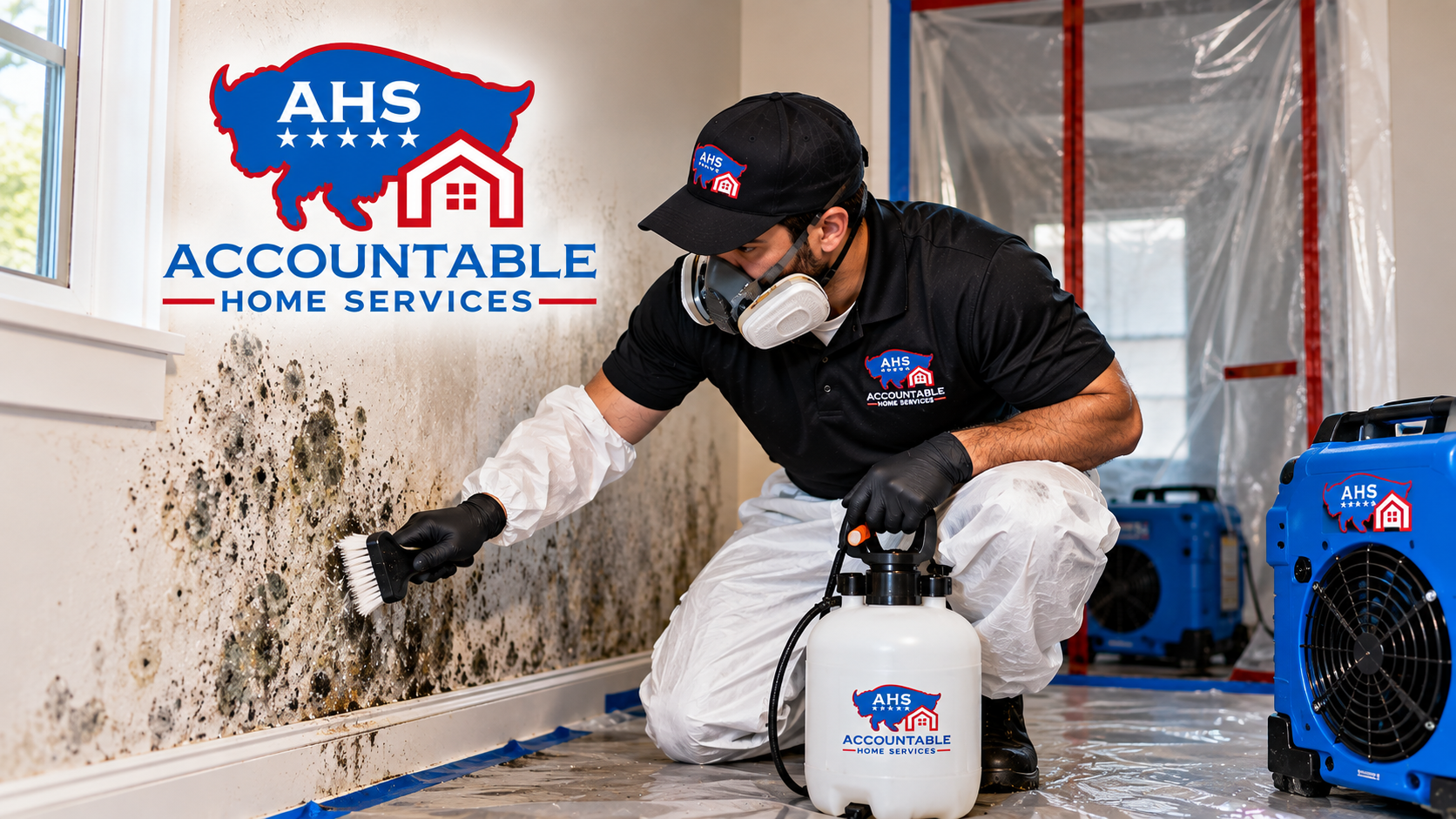
Mold prevention starts with moisture control. AHS focuses on finding and drying wet materials quickly, improving airflow where needed, and removing materials that cannot be properly dried. Not every water loss becomes a mold problem, but delays, hidden moisture, and incomplete drying increase the risk.
Documentation and restoration support
Good documentation can make the process less stressful. AHS documents affected areas, moisture findings, photos, drying progress, removed materials, and work performed. For a water damage insurance claim Colorado homeowners may file, this kind of organized information can help explain what happened and what was done to reduce further damage. AHS does not decide coverage, but clear documentation can support the conversation between the homeowner, adjuster, agent, and other professionals.
Insurance agents, plumbers, and property managers all need clear handoffs
Frozen pipes Colorado homeowners experience often involve more than one professional. The homeowner wants the water stopped, the home dried, and the claim process explained in plain language. The insurance agent wants a restoration partner who communicates well and does not create confusion. The plumber wants to repair the pipe and know the customer is covered for the water damage side. The property manager wants quick response, tenant communication, and documentation for the owner.
A clear handoff helps everyone. The plumber can focus on the pipe repair. AHS can focus on extraction, drying, moisture tracking, damaged-material removal, mold prevention, and restoration coordination. The insurance agent or property manager can stay informed without chasing down basic details.
Practical checklist after a pipe bursts
Use this checklist if water is already in the home:
- Shut off the main water supply if safe to do so.
- Avoid electrical hazards and stay away from sagging ceilings.
- Call a plumber for the burst or frozen pipe repair Louisville homeowners need.
- Call AHS for water damage restoration Louisville support.
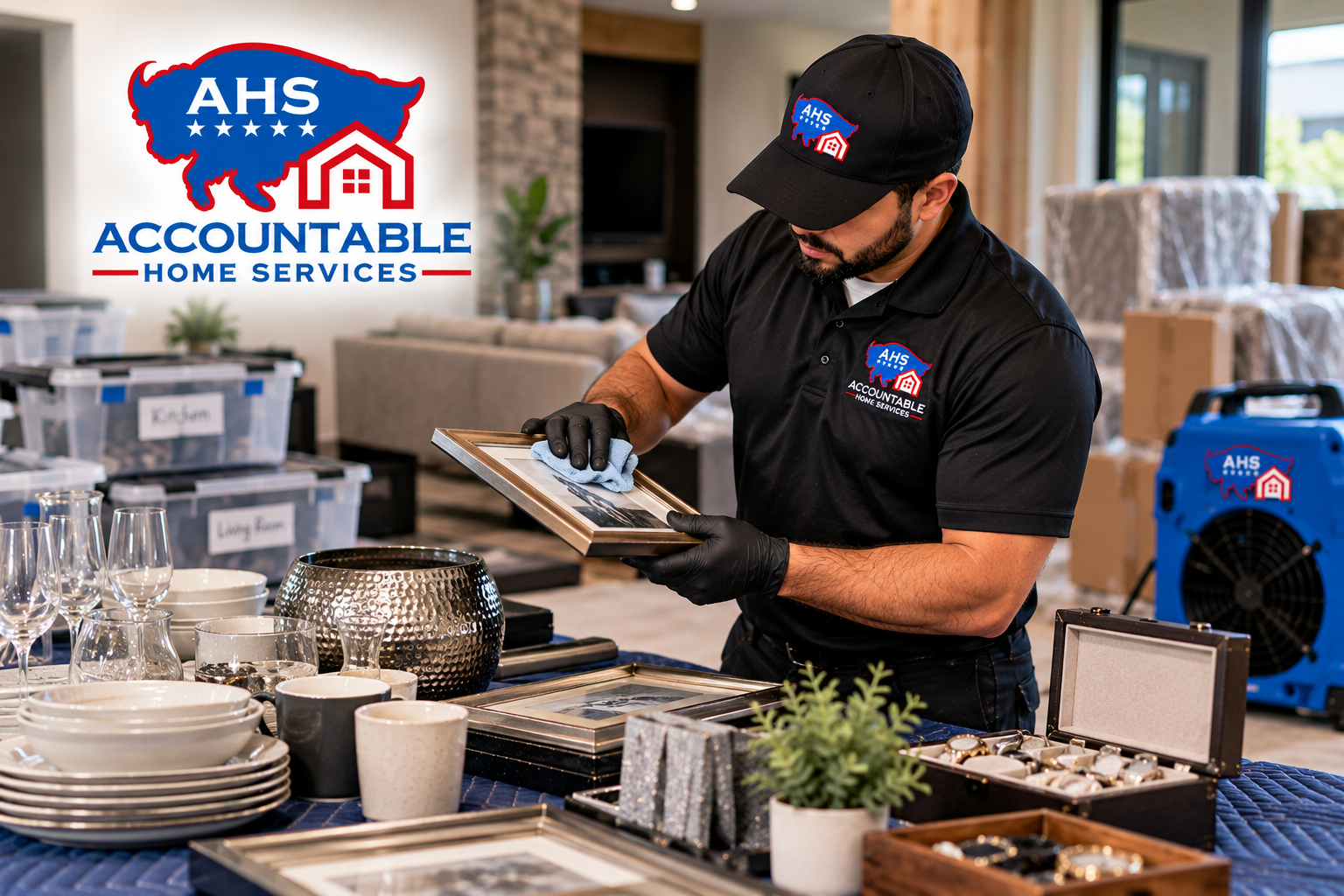
- Move small valuables out of wet areas if it is safe.
- Take photos before moving major items or removing materials.
- Do not tear out wet walls or flooring without guidance unless there is an immediate safety concern.
- Keep damaged materials until your restoration team or insurer advises otherwise.
- Start drying quickly, but avoid relying only on household fans.
- Save receipts and notes related to temporary repairs, emergency services, and damage.
The first few hours matter, but they do not have to be chaotic. Stop the source, protect people, document what you can, and bring in the right help.
Local help for frozen pipe water damage
Frozen pipes can start as a small winter plumbing issue and quickly become a serious water damage event. Preventing frozen pipes is about insulation, heat, airflow, and monitoring. Repairing frozen plumbing is the plumber’s job. Restoring the home after water escapes is where AHS helps with water extraction, moisture detection, drying, material removal, mold prevention, documentation, and restoration support.
If you are dealing with frozen pipes Louisville CO homeowners often face during cold weather, do not wait to see how bad it gets. Call a plumber for the pipe and call AHS when water has reached floors, walls, ceilings, cabinets, or contents. A calm, well-documented response can help protect the property, reduce further damage, and make the next steps clearer for everyone involved.