Sewage Backup Cleanup Cost in Northglenn, CO: What Homeowners Should Expect
Sewage Backup Cleanup Cost in Northglenn, CO: What Homeowners Should Expect
Sewage cleanup is not the same as ordinary water cleanup. In Northglenn homes, a sewer backup can involve contaminated water, damaged building materials, odor, documentation, and sometimes reconstruction, so the final price depends on more than the amount of water on the floor. The Local Restoration Guide uses this overview to help homeowners, property managers, plumbers, and insurance professionals understand realistic cost drivers before decisions become rushed.
What does sewage backup cleanup usually cost in Northglenn, CO?
A reasonable starting estimate for sewage backup cleanup cost per square foot is often $7 to $14 per square foot for cleanup-related work, with many total projects landing somewhere between $2,000 and $10,000. A limited toilet overflow cleanup in a small bathroom may be far less complex than a basement sewage backup that spreads through carpet, drywall, storage contents, and mechanical areas. Severe losses involving multiple rooms, prolonged exposure, demolition, odor control, and repairs can exceed $15,000.
Those ranges are planning numbers, not a substitute for an on-site inspection. The sewage cleanup cost Northglenn CO homeowners receive on a written estimate should reflect measurements, material conditions, safety requirements, drying needs, and disposal. A quote that looks high compared with “standard water damage” may be justified if the job involves black water cleanup, controlled demolition, sanitizing, and reconstruction.
Why sewage cleanup costs more than standard water damage cleanup
Sewage water damage usually costs more because it is treated as contaminated water cleanup, not just moisture removal. Clean water from a supply line may require extraction, drying, and limited material removal if handled quickly. Sewage, drain backup, and many toilet overflow situations can carry bacteria, organic waste, and other contaminants, so the response must protect occupants and workers before restoration begins.
That difference changes the whole project. Crews may need protective equipment, containment, safe disposal of affected porous materials, repeated cleaning, antimicrobial treatment, odor control, moisture monitoring, and detailed documentation. In practical terms, sewage damage restoration is slower, more controlled, and more labor-intensive than many ordinary drying projects.
A plumber or sewer contractor usually handles the source: clearing the blockage, repairing a broken line, scoping the sewer, or advising on replacement. A restoration company handles the contaminated interior: extraction, demolition, cleaning, drying, documentation, and repairs. Both roles matter, but they solve different parts of the loss.
Main factors that change the final price
Two homes can have the same backup source and very different costs. The difference is usually not random; it comes from how far the sewage traveled, what it touched, and how long it remained before professional mitigation began.
Key pricing factors include:
- Quantity of contaminated water: More sewage means more extraction, more handling, and often more affected materials.
- Extent of spread: A backup contained to hard bathroom tile is different from sewage that reaches hallways, carpet, closets, finished basement rooms, or shared walls.
- Duration before cleanup: The longer contaminated water sits, the greater the risk of odor absorption, material deterioration, and secondary microbial growth.
- Affected materials: Concrete and tile may be cleaned differently than carpet, pad, drywall, insulation, baseboards, laminate, engineered wood, and upholstered contents.
- Removal requirements: Drywall, flooring, insulation, and contents may need to be removed when contamination cannot be cleaned safely.
- Access and layout: Finished basements, crawlspaces, slab plumbing, utility rooms, and tight mechanical spaces can add labor.
- Timing: After-hours response, weekend work, or emergency service during regional storm events may affect availability and price.
This is why sewer backup cleanup Northglenn estimates should be based on a room-by-room inspection rather than a quick phone price. A professional should identify the source area, map the spread, evaluate materials, and explain which items can be cleaned and which should be removed.
Typical cost components homeowners see on estimates
A sewage backup cleanup cost often includes several categories of work. Not every project needs every line item, but understanding the categories helps homeowners and insurance agents read estimates more confidently.
Cost component
Common planning range
What it covers
Water extraction
$3.75 to $7 per sq. ft.
Removing standing contaminated water and sludge where accessible
Demolition and debris removal
$700 to $2,000+
Removing unsalvageable drywall, carpet, pad, insulation, baseboards, and affected debris
Antimicrobial treatment
$0.75 to $1.50 per sq. ft.
Treating cleaned surfaces after gross contamination is removed
Drying equipment and monitoring
Several hundred dollars per day plus visits
Air movers, dehumidifiers, moisture checks, and documentation
Odor treatment
$400 to $1,200+
Hydroxyl, thermal fogging, or other odor-control methods when needed
Reconstruction
Varies widely
Replacing drywall, trim, flooring, paint, insulation, and finishes
Sewer line repair is separate from interior cleanup in many cases. If the backup was caused by a collapsed line, root intrusion, or failed exterior pipe, repair or replacement can add substantial cost beyond restoration. That portion is typically assessed by a plumber or sewer contractor, not the mitigation crew.
What happens during professional sewage damage restoration?
Professional sewage cleanup follows a controlled sequence because the goal is not only to make the area look dry. The goal is to remove contamination, dry the structure, reduce odor, document the loss, and prepare the home for safe repair.
A typical process includes:
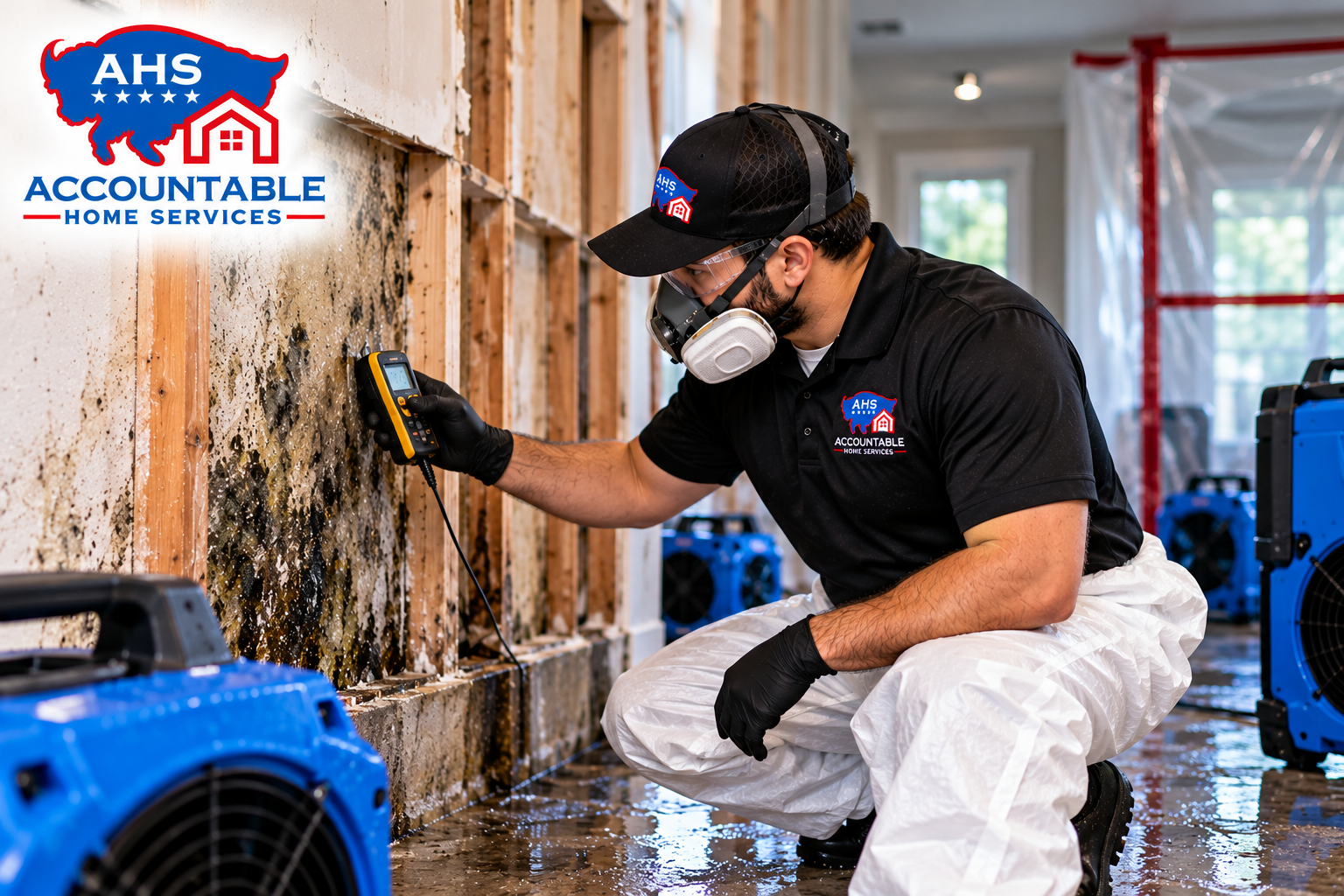
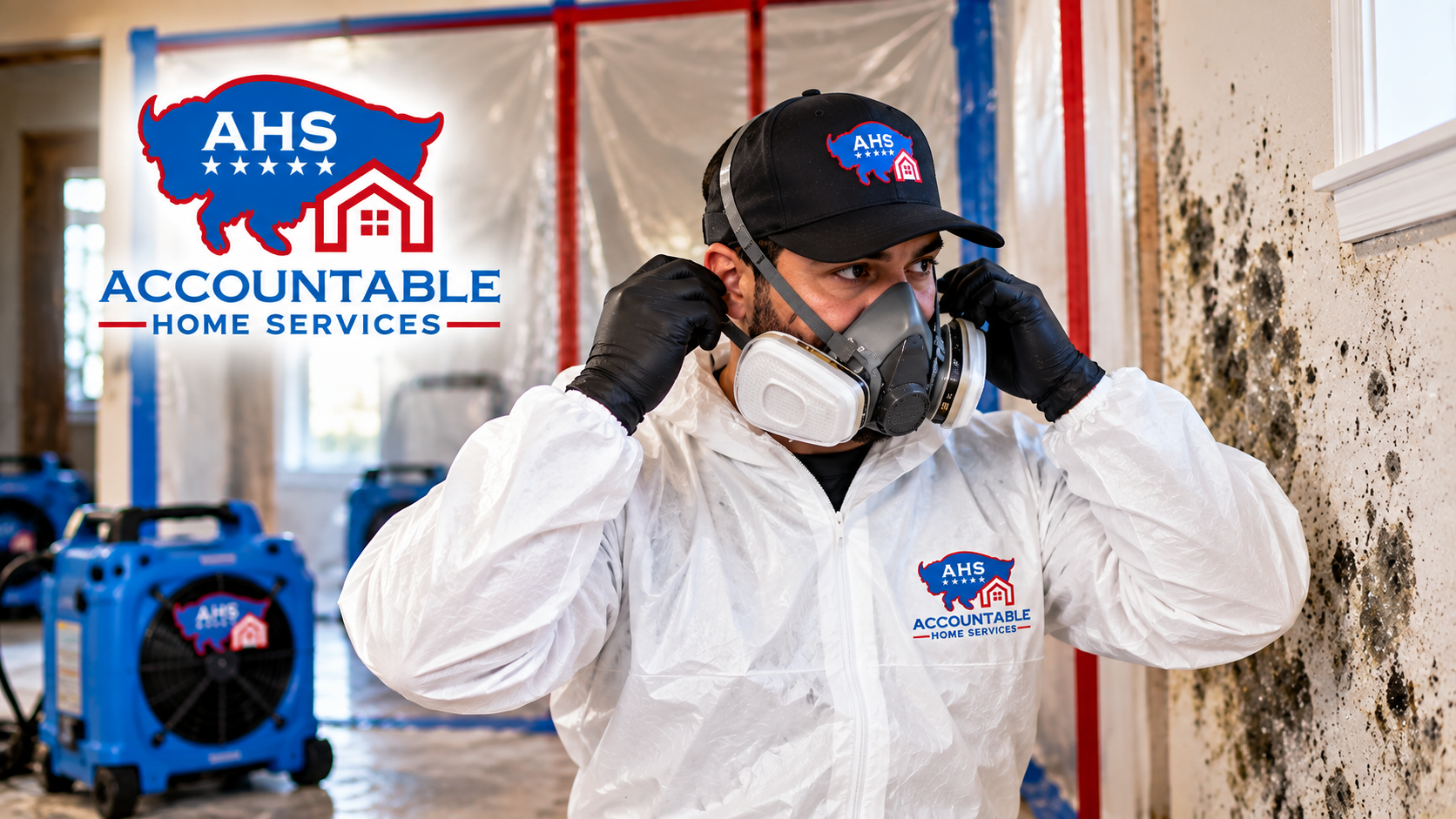
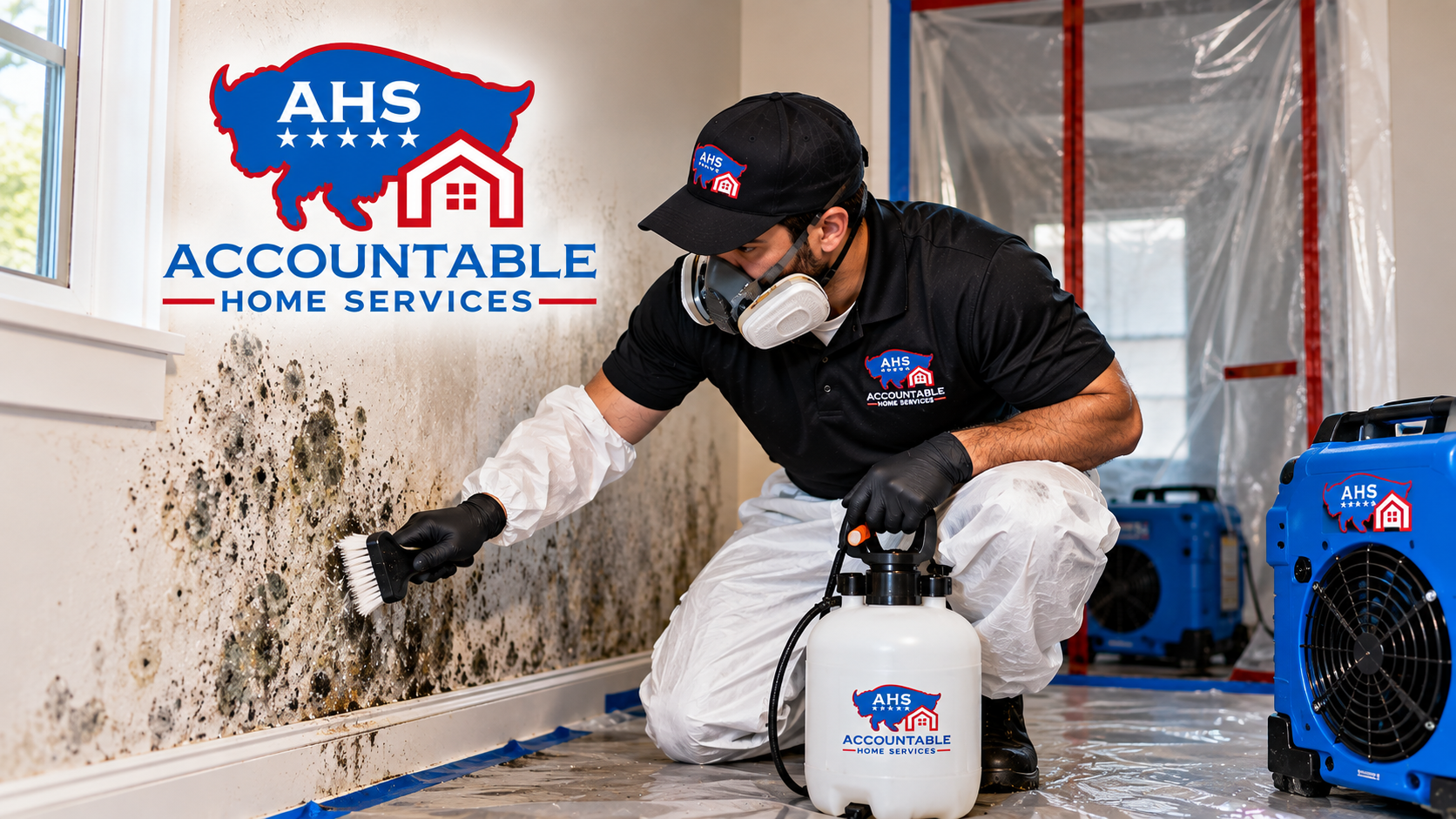
- Safety assessment and PPE: Crews evaluate access, electrical hazards, contamination level, and occupant exposure. Workers use appropriate personal protective equipment such as gloves, respiratory protection, eye protection, suits, and boots.
- Source coordination: If the backup is active, the plumber or sewer contractor addresses the blockage or failed line before restoration proceeds fully.
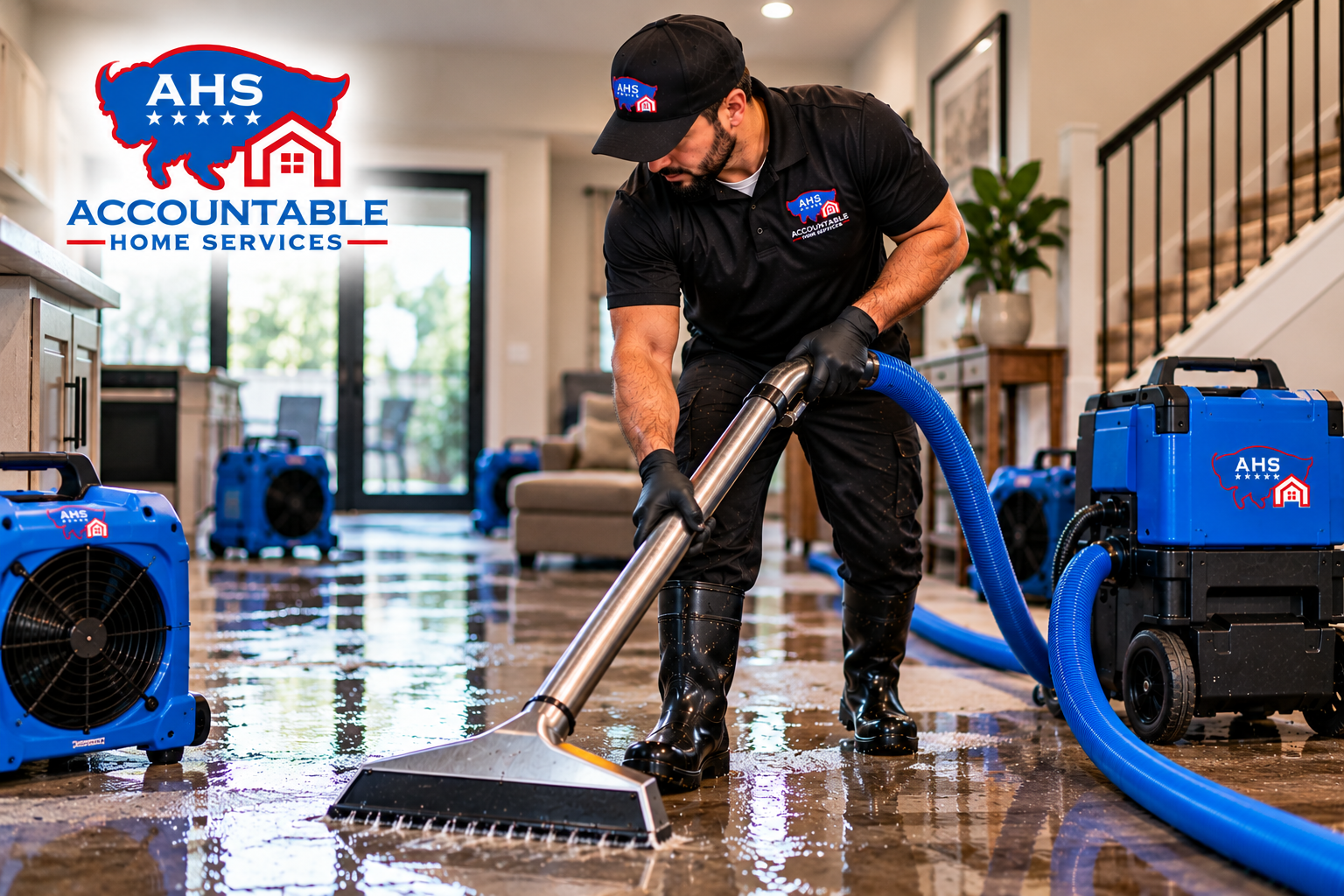
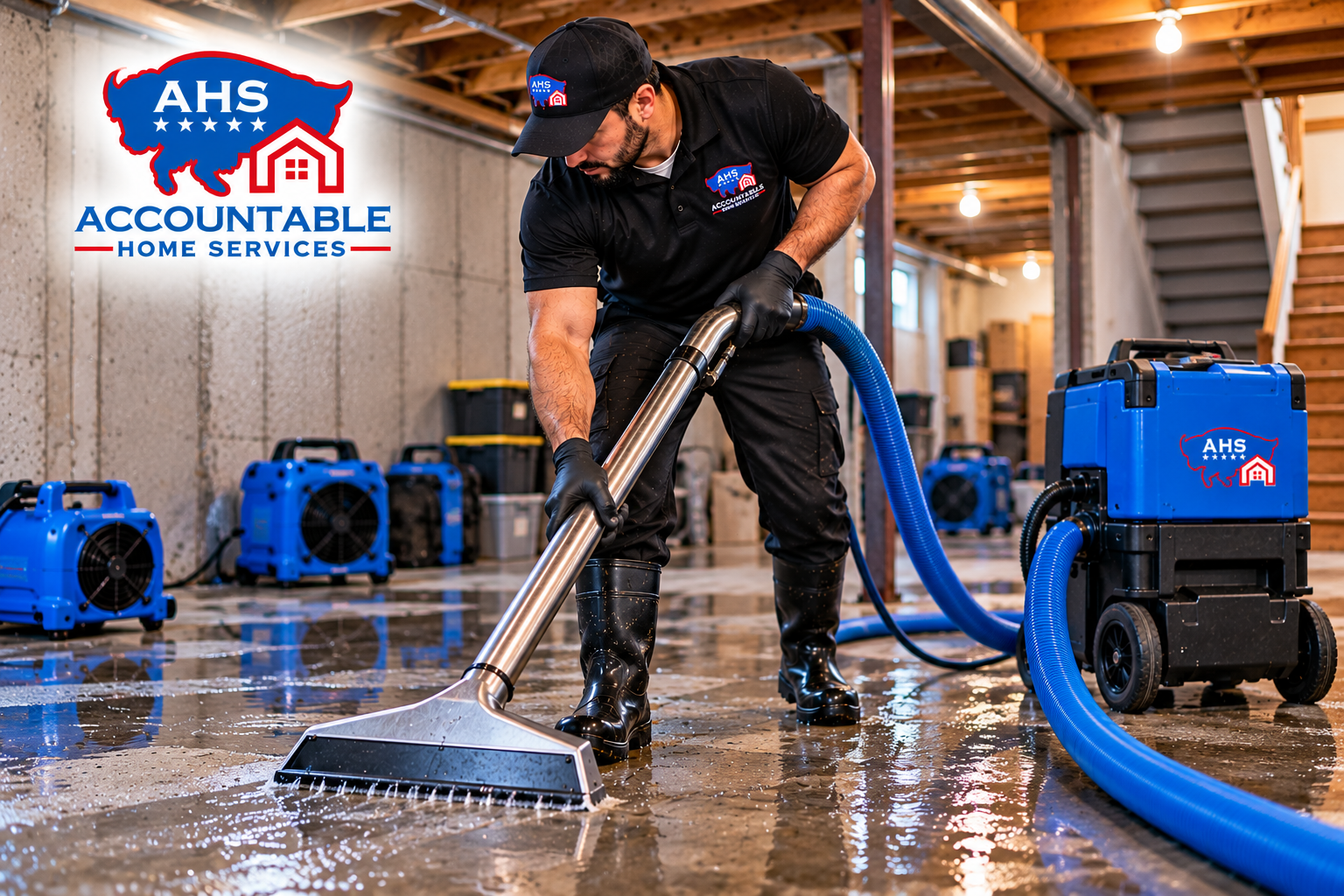
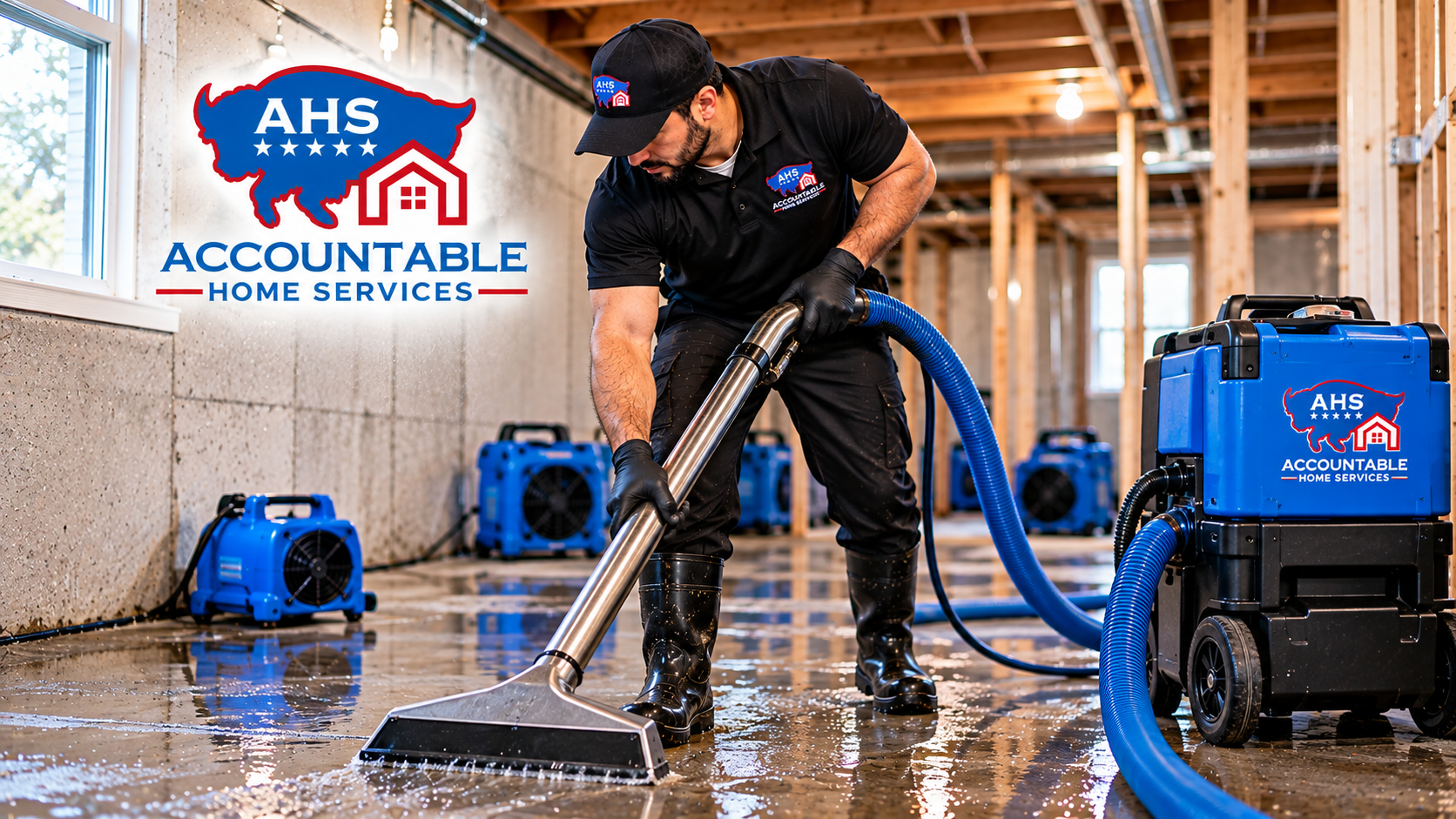
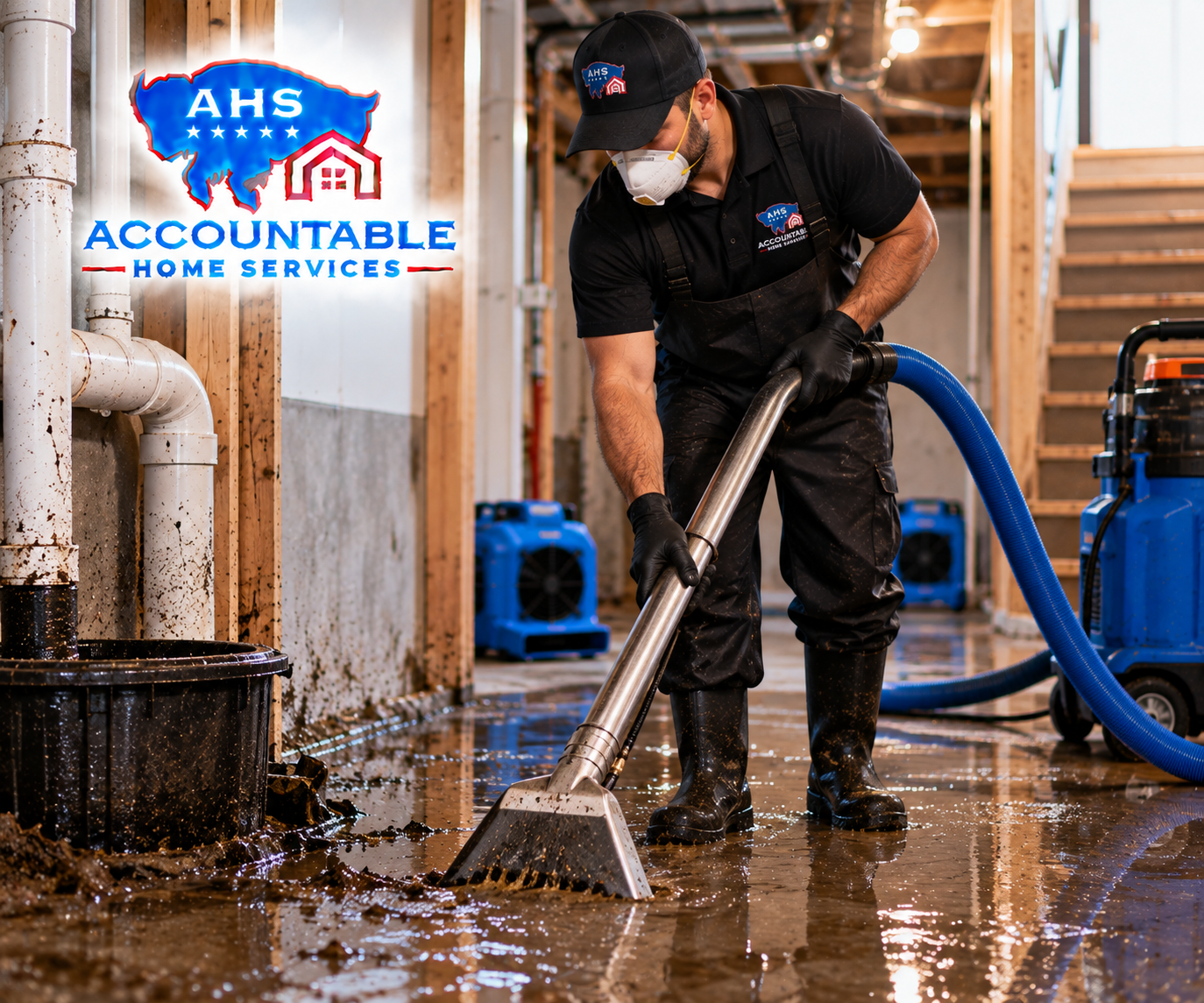
- Extraction: Standing sewage and contaminated water are removed with professional extraction equipment designed for unsafe water losses.
- Removal of porous materials: Carpet, pad, wet insulation, contaminated drywall, and affected porous contents are commonly removed when they cannot be cleaned safely.
- Cleaning and sanitizing: Remaining hard surfaces are cleaned, rinsed, and treated with appropriate antimicrobial products.
- Odor treatment: Odor removal after sewage backup may require source removal first, followed by hydroxyl generators, controlled fogging, or other professional methods. Deodorizer alone rarely solves a sewage odor if contamination remains.
- Structural drying: Dehumidifiers and air movement are used after contaminated materials are removed and surfaces are cleaned. Drying is monitored with moisture readings.
- Documentation: Photos, measurements, moisture logs, affected-material notes, and disposal records support the project file and may help with an insurance claim.
- Reconstruction: Once mitigation is complete, repairs may include drywall, texture, paint, trim, flooring, cabinetry, and finish work.
For plumbers, this distinction is useful when advising customers: fixing the pipe does not dry or sanitize the building. For property managers, it helps explain why tenant communication, access, and documentation need to start quickly.
Insurance considerations for Colorado sewer backups
Many homeowners are surprised to learn that sewer backup coverage may not be automatically included in a standard homeowners policy. The Colorado Division of Insurance describes water backup coverage, also called sewer or sump pump backup coverage, as an endorsement that covers damage caused by backup of sewers or drains or overflow from a sump pump. Homeowners should review their policy and speak with their agent before assuming coverage exists. (doi.test.colorado.gov)
A sewer backup insurance claim Colorado homeowners file is usually stronger when documentation starts early. Report the loss promptly, take photos before moving items if it is safe, keep damaged materials available for inspection when possible, and save invoices from plumbers and restoration contractors. Some local public agencies also advise homeowners to contact their carrier even when responsibility is uncertain, because coverage and liability can depend on the facts and the policy language. (evergreenmetro.colorado.gov)
Insurance agents can reduce frustration by encouraging clients to verify three items in advance: whether water backup coverage exists, what limit applies, and whether service line coverage is separate. Restoration documentation does not create coverage, but it can help the adjuster understand the scope, timing, affected materials, and mitigation steps taken to reduce further damage.
When DIY cleanup is not a good choice
Small clean-water spills are sometimes manageable for homeowners. Sewage is different. If wastewater has backed up through a floor drain, shower, toilet, or basement drain, the contamination can spread under flooring, into wall cavities, behind baseboards, and through stored contents.
DIY cleanup is especially risky when:
- Sewage touched carpet, pad, drywall, insulation, or upholstered furniture.
- The water reached a finished basement, crawlspace, or mechanical room.
- Children, older adults, tenants, or immune-compromised occupants may be exposed.
- Odor remains after mopping or surface cleaning.
- The loss may become an insurance claim.
- The backup sat for several hours or longer before discovery.
Ordinary fans can also create problems by spreading odors and airborne contaminants before contaminated materials are removed. If the affected area is more than a very small, contained hard-surface spill, calling a qualified restoration provider is usually the safer path.
Practical steps to take before help arrives
The first hour matters, but safety comes first. Do not enter standing sewage if electricity may be involved, and do not let tenants, pets, or family members walk through affected areas.
Use this short checklist:
- Stop using sinks, toilets, showers, washing machines, and dishwashers until the line is evaluated.
- Call a plumber or sewer contractor if the drain is still backing up or the blockage has not been cleared.
- Call a restoration company for water damage restoration Northglenn services when sewage has entered finished areas.
- Photograph affected rooms, water lines, damaged contents, and the suspected source.
- Move clean, unaffected items away only if you can do so without walking through contamination.
- Notify your insurance agent or carrier and ask whether water backup coverage applies.
- Keep receipts, service notes, and written communications.
These steps help limit further damage and create a clearer record. They also help everyone involved—the homeowner, property manager, plumber, restoration contractor, agent, and adjuster—work from the same facts.
The clearest estimate comes from inspection, not guesswork
Online averages are useful for setting expectations, but the actual sewage cleanup cost depends on field conditions. A small bathroom event, a basement sewage backup, and a multi-unit property loss can all start with the same drain problem and end with very different scopes of work.
For homeowners in Northglenn, the best next step is to stop the source, avoid exposure, document what you can safely see, and request a professional inspection. For insurance agents, plumbers, and property managers, referring quickly to a restoration partner that communicates clearly and documents carefully can protect the client experience as much as the building itself. Proper black water cleanup is not just about removing a mess; it is about restoring the property in a way that is safe, defensible, and understandable from start to finish.