Septic Service Near Me in Erie, CO: What Homeowners Should Know
Septic Service Near Me in Erie, CO: What Homeowners Should Know
A septic backup in an Erie home needs two kinds of help: a licensed septic contractor for the system itself and a restoration team for sewage contamination inside the home. Accountable Home Services helps with the cleanup, sanitization, drying, documentation, and restoration side when septic failure leads to black water intrusion, sewage water damage, or contaminated water cleanup. If sewage has entered finished space, stop using water if you can, keep people and pets away, and call for professional help before trying to clean it yourself.
What should you do first after a septic backup?
If you have a septic backup Erie homeowners should treat it as contaminated water, not just a messy plumbing problem. Avoid contact with the water, do not run more toilets, showers, sinks, or laundry, and move people and pets away from affected rooms. Then call a licensed septic contractor for septic tank problems, pumping, inspection, or repair, and contact AHS for emergency septic backup restoration inside the home.
Your first goal is to stop making the situation worse. Using more water can add pressure to the system and may push more sewage into the house. If the backup is in a basement, bathroom, laundry room, crawlspace, or utility area, limit access and wait for trained cleanup help.
Call Accountable Home Services for emergency cleanup and restoration when sewage has touched flooring, drywall, trim, cabinets, stored belongings, or HVAC areas. Call a licensed septic contractor for the septic tank service work itself, including pumping, line clearing, tank repairs, drain field concerns, or system diagnosis.
Septic warning signs Erie homeowners should not ignore
Septic issues often give warning signs before a full backup. Sometimes they are easy to miss because they look like normal drain problems at first. If you notice more than one sign, it is smart to slow down water use and get the system checked.
Common warning signs include:
- Toilets, tubs, or showers draining slowly in more than one room
- Gurgling sounds from drains after flushing or running water
- Sewage odors inside the home, near floor drains, or outside near the tank area
- Water or waste backing up into a basement drain, tub, shower, or toilet
- Wet, soft, or unusually green areas in the yard near the tank or drain field
- Frequent clogs that return after basic drain cleaning
- A septic alarm sounding, if your system has one
- Backup during heavy water use, such as laundry day or after guests visit
These signs can point to several septic tank problems. The tank may be full, a line may be blocked, the pump may have failed, or the drain field may not be accepting water properly. A restoration company can help once contamination enters the home, but the system issue needs a qualified septic professional.
What septic contractors usually handle
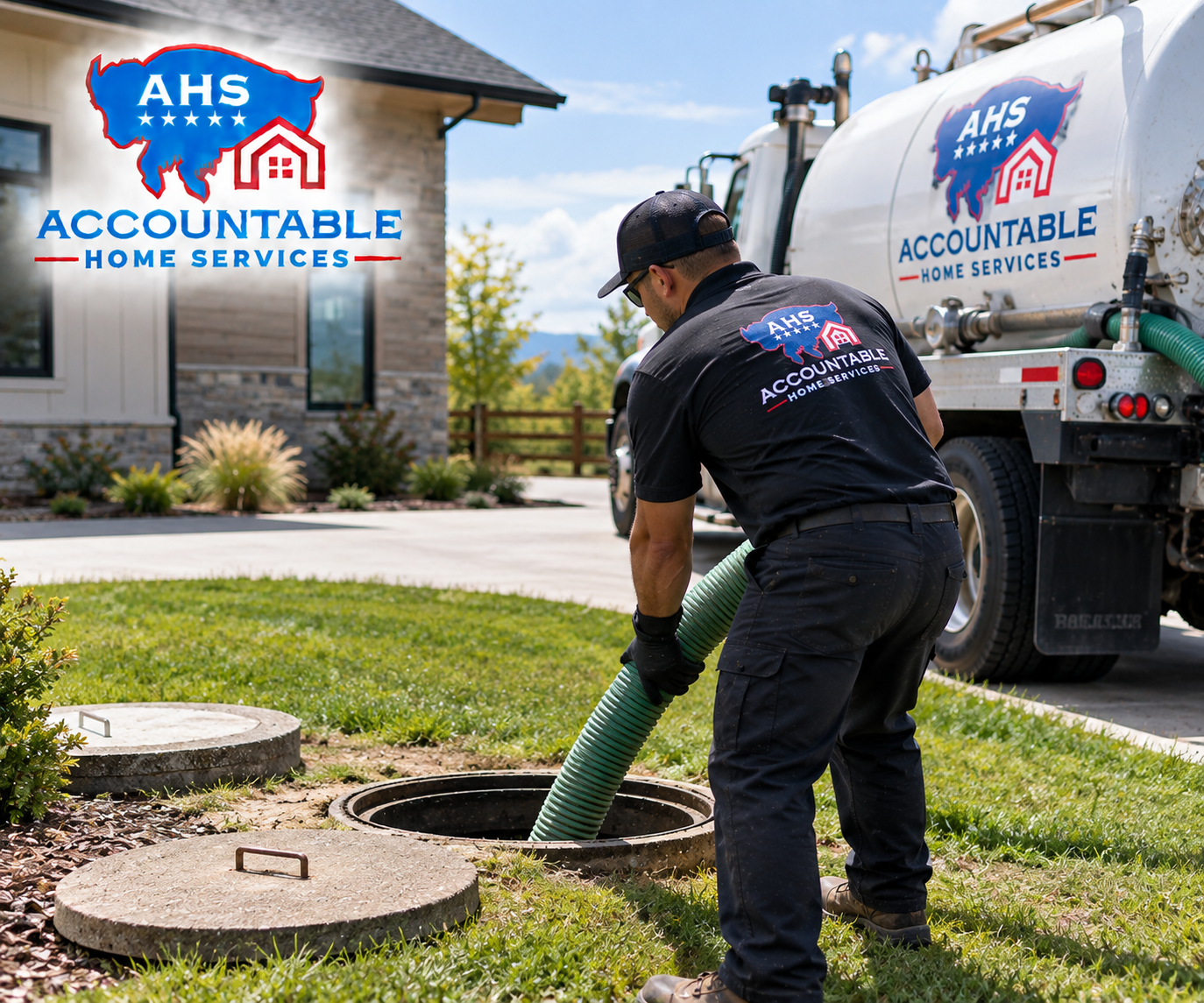
When people search for septic service near me or septic pumping near me, they are usually looking for a contractor who works on the outside system. This is different from interior restoration. A septic contractor evaluates and services the parts that move wastewater away from the house.
Typical septic contractor services may include:
- Locating and accessing the septic tank
- Septic pumping to remove solids and wastewater from the tank
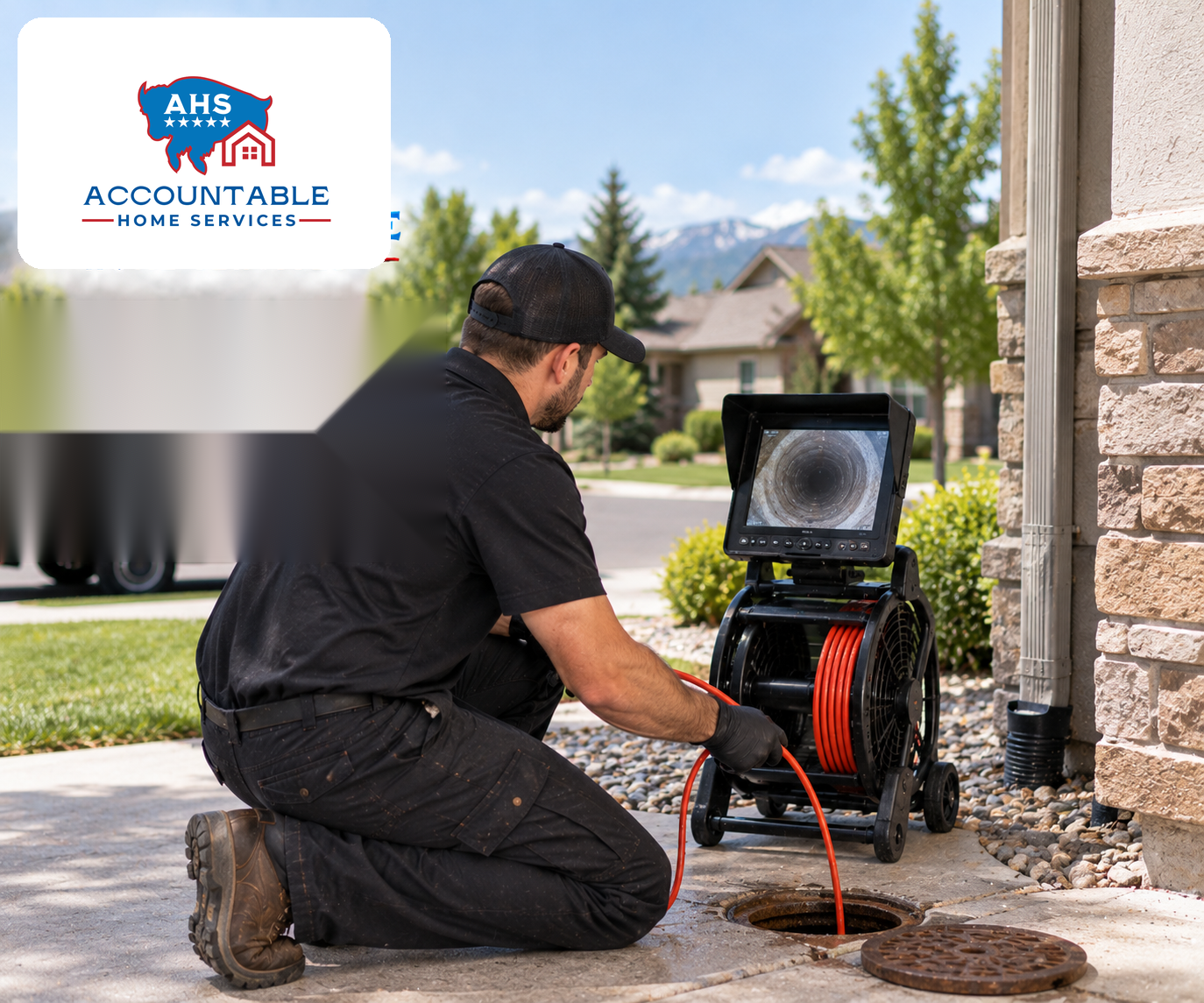
- Inspecting the tank, lids, baffles, pumps, alarms, and visible components
- Clearing or repairing septic lines between the home and tank
- Looking for root intrusion, collapsed lines, or blockages
- Troubleshooting pump chamber or lift station problems
- Evaluating drain field symptoms
- Recommending repairs, replacement, or further inspection when needed
If the problem is still active, call the septic contractor first or at the same time as restoration. They can help stop the source of the backup. Once the source is controlled, AHS can focus on septic overflow cleanup, black water cleanup, drying, odor control, and repairs to affected indoor areas.
How AHS helps with interior sewage and water damage
Accountable Home Services is not presented here as a septic pumping, inspection, or repair contractor. AHS helps with the damage that happens inside the property when a septic failure causes sewage contamination, black water intrusion, or water damage restoration Erie homeowners need after a backup.
Sewage water damage can affect more than the surface you can see. Porous materials may absorb contaminated water. Moisture can spread under flooring, behind baseboards, into drywall, and into nearby rooms. Cleaning only the visible mess can leave moisture and contamination behind.
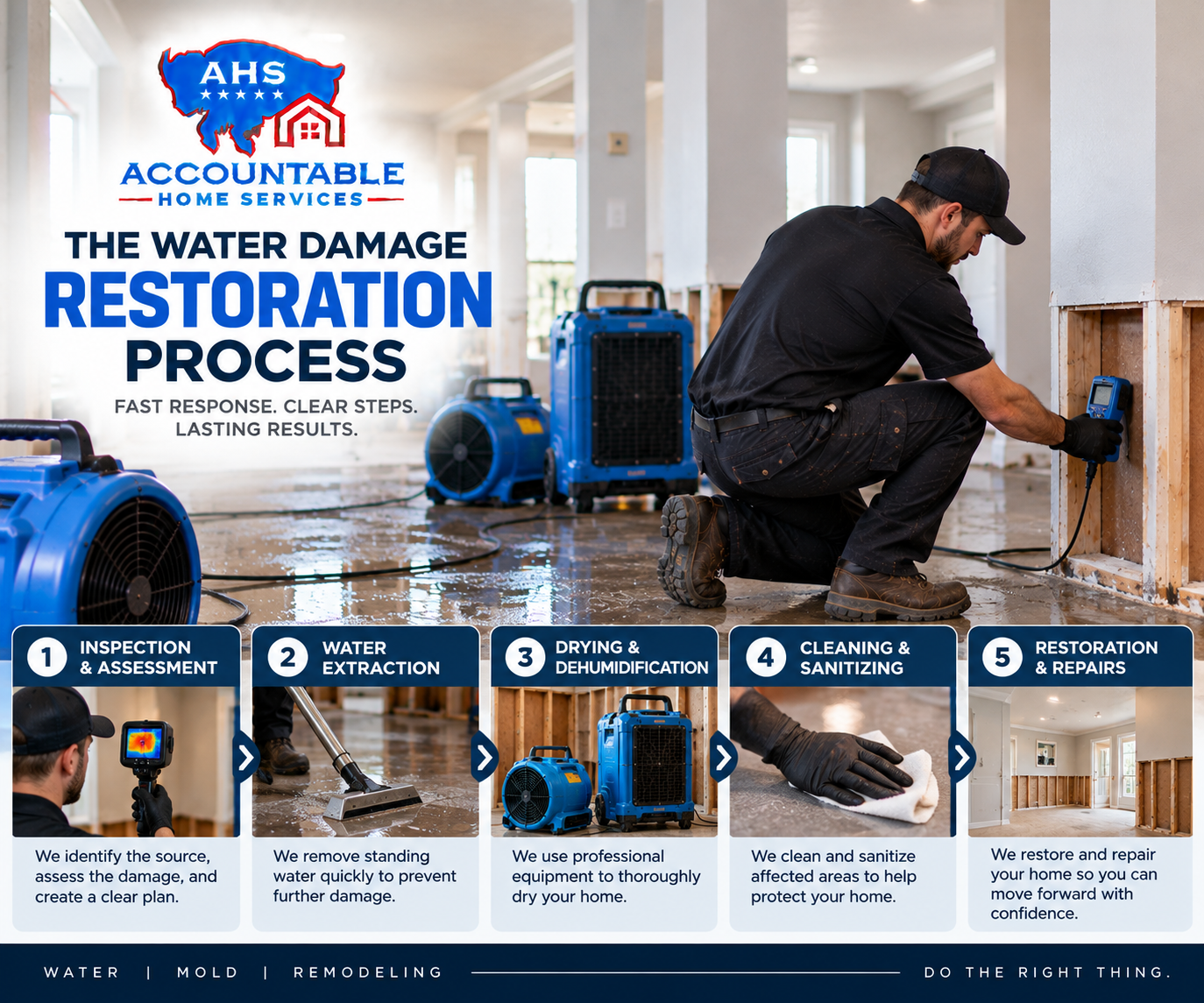
AHS can help with the restoration side by addressing:
- Sewage backup cleanup Erie homes may need after toilets, tubs, or floor drains overflow
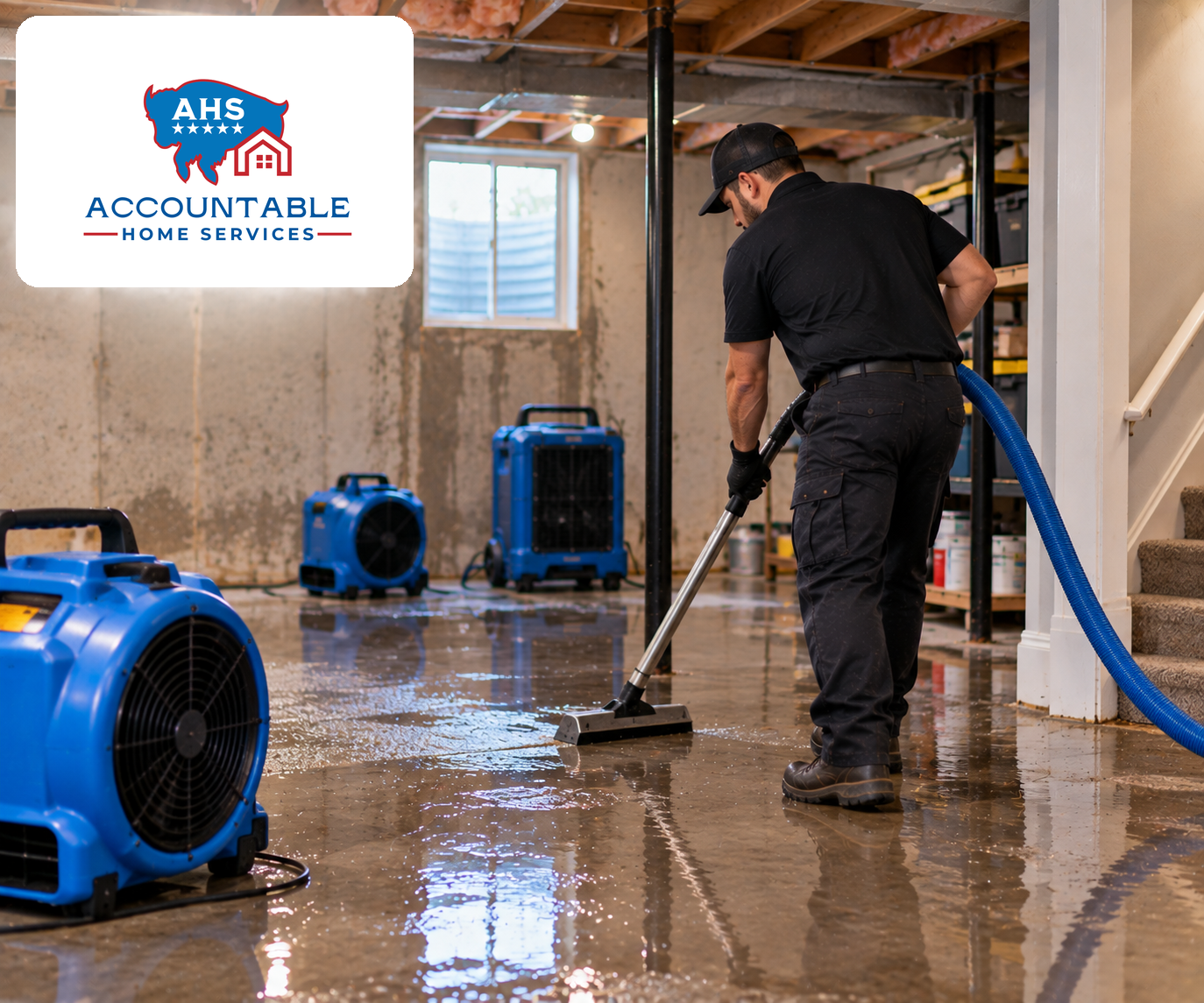
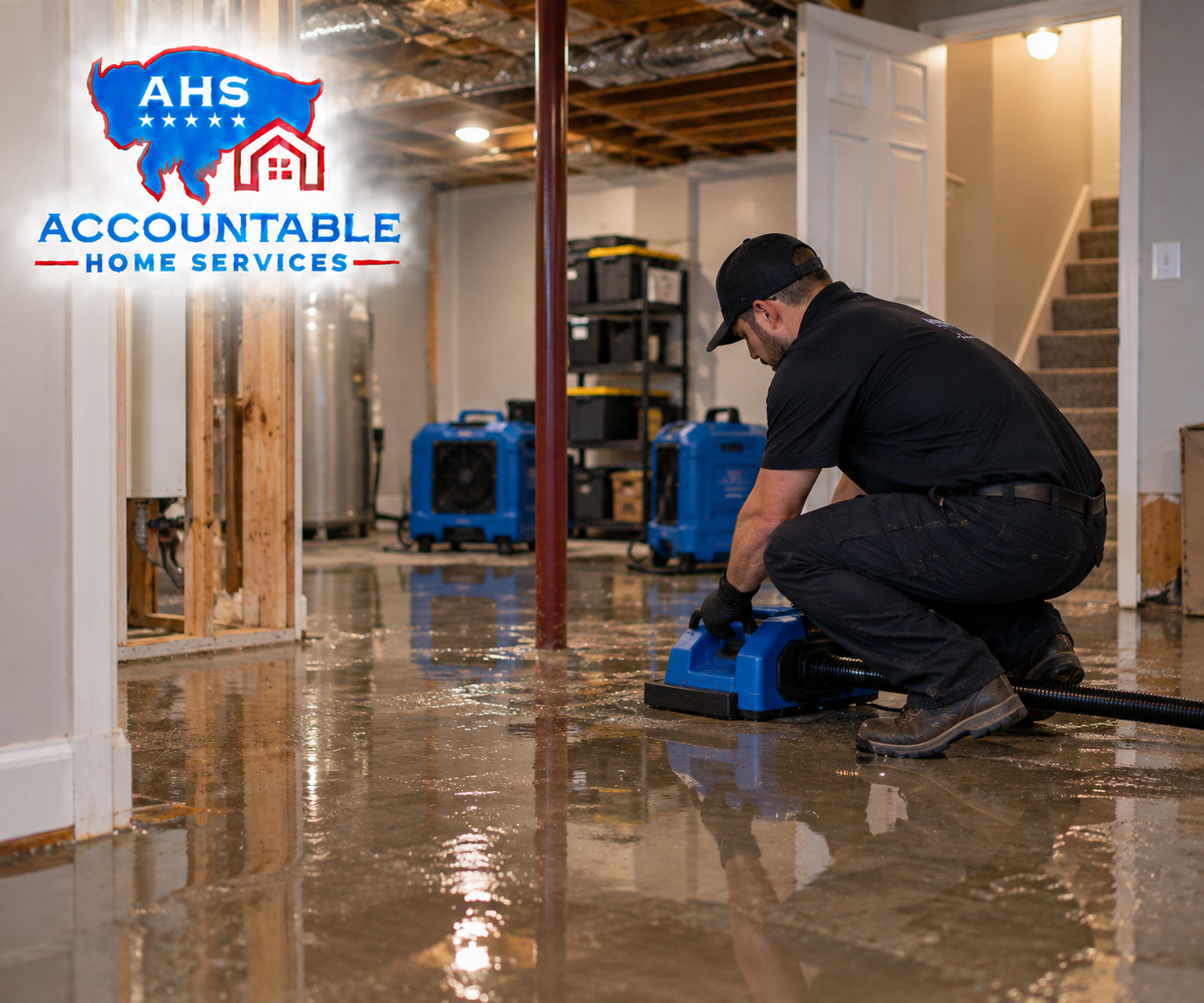
- Removal of contaminated water and affected porous materials when needed
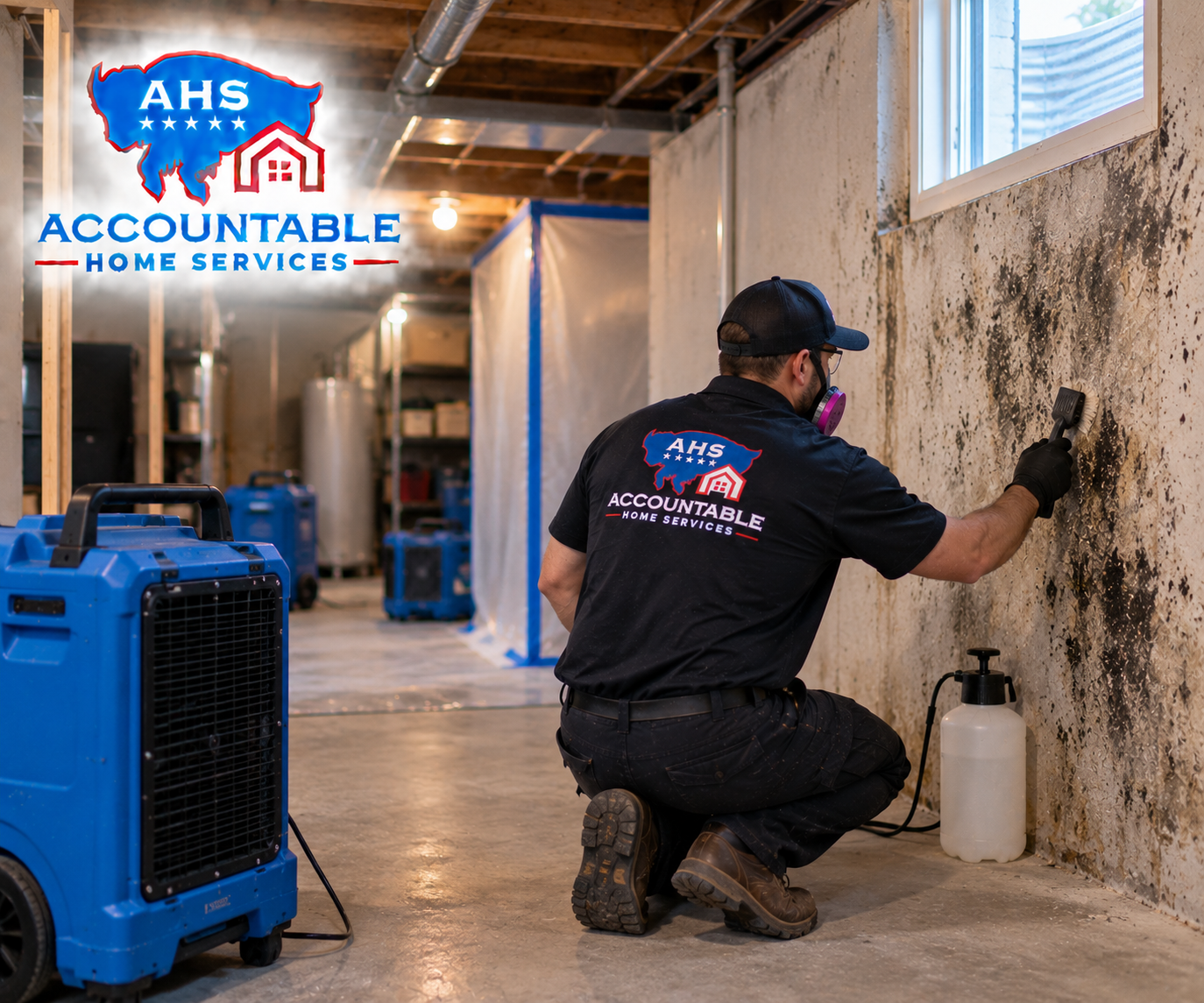
- Cleaning and sanitizing affected surfaces
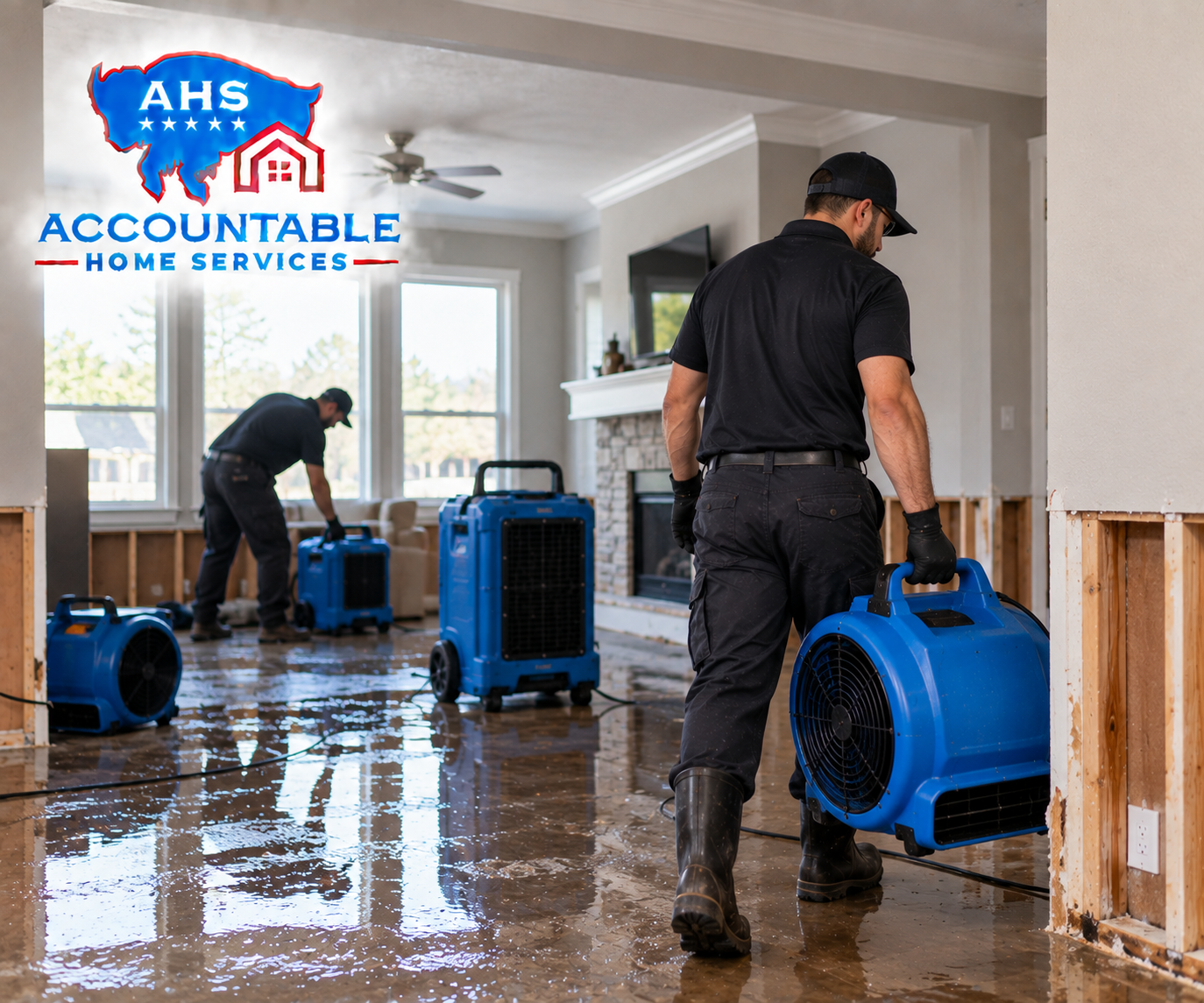
- Drying wet structural areas with professional equipment
- Moisture checks to help reduce hidden damage
- Odor control related to the contaminated water event
- Documentation of damage, cleanup steps, photos, and drying progress
- Coordination-minded communication for homeowners, insurance agents, plumbers, and property managers
This role matters because septic backups are both cleanup and documentation events. Homeowners want the property made safe and usable again. Insurance agents, plumbers, and property managers also need clear communication so the next step is not a guessing game.
Why black water cleanup is different from ordinary water cleanup
Water from a septic backup is commonly treated as black water because it may contain sewage, bacteria, and other contaminants. That does not mean you need panic. It does mean the cleanup should be handled differently than a clean supply line leak or a small rainwater issue.
With black water cleanup, the safe approach is to separate clean areas from affected areas, remove what cannot be cleaned properly, sanitize what can be saved, and dry the structure. Carpet pad, some flooring, lower drywall, insulation, and stored porous items may need special attention depending on the situation. A professional can help decide what is cleanable and what should be removed.
Homeowners sometimes want to mop, spray disinfectant, and move on. That may seem faster, but it can miss contamination under materials and moisture inside building cavities. AHS focuses on practical cleanup, not scare tactics: identify what was affected, clean what can be cleaned, remove what cannot, dry the structure, and document the work.
Immediate steps to protect the home and the claim
A septic backup is stressful, but a few simple actions can help limit damage and support a smoother claim process. Do only what you can safely do. If you are unsure, wait for a professional.
Take these steps right away:
- Stop using water in the home if possible, including toilets, showers, sinks, dishwasher, and laundry.
- Keep children, pets, tenants, and visitors away from affected rooms.
- Do not walk through sewage water unless you must for safety.
- Avoid using fans that can spread odor or contaminants from the affected area into clean areas.
- Do not remove wet materials before photos are taken unless there is an immediate safety need.
- Take wide photos and close-up photos from a safe distance.
- Call a licensed septic contractor for pumping, inspection, line work, or repairs.
- Call AHS for emergency septic backup restoration, sanitization, drying, and interior repairs.
- Notify your insurance agent or carrier if you plan to open a claim.
- Save receipts, service notes, photos, and any written findings from the septic contractor.
Good documentation can make a real difference. It helps show what happened, what rooms were affected, what materials were damaged, and what steps were taken to reduce further loss. AHS understands that homeowners and insurance partners need organized information, not vague updates.
When to call a licensed septic contractor
Call a licensed septic contractor any time the septic system may be the source of the backup or overflow. This includes repeated drain backups, sewage odors near the tank, wet yard areas near the drain field, a septic alarm, or any backup that happens when multiple fixtures are used. You should also call if you are overdue for pumping or if you recently had heavy household water use and the system is struggling.
A septic contractor can tell you whether the tank needs pumping, whether a line is blocked, or whether there is a repair issue. If you are searching septic service Erie CO because sewage is already inside the house, do not stop at the system repair. Once the source is controlled, the indoor cleanup still needs proper attention.
For property managers, this split is especially important. The septic contractor handles the system, while AHS helps reduce interior damage, tenant disruption, odor concerns, and moisture problems. For plumbers, AHS can step in when the plumbing or septic issue has created water damage beyond the repair itself.
Local cleanup support for Erie homes
Erie homes can have a mix of finished basements, crawlspaces, utility rooms, and lower-level bathrooms where a septic overflow can cause damage quickly. The right response depends on where the water went, how long it sat, and what materials it touched. A calm inspection and clear plan are better than guessing.
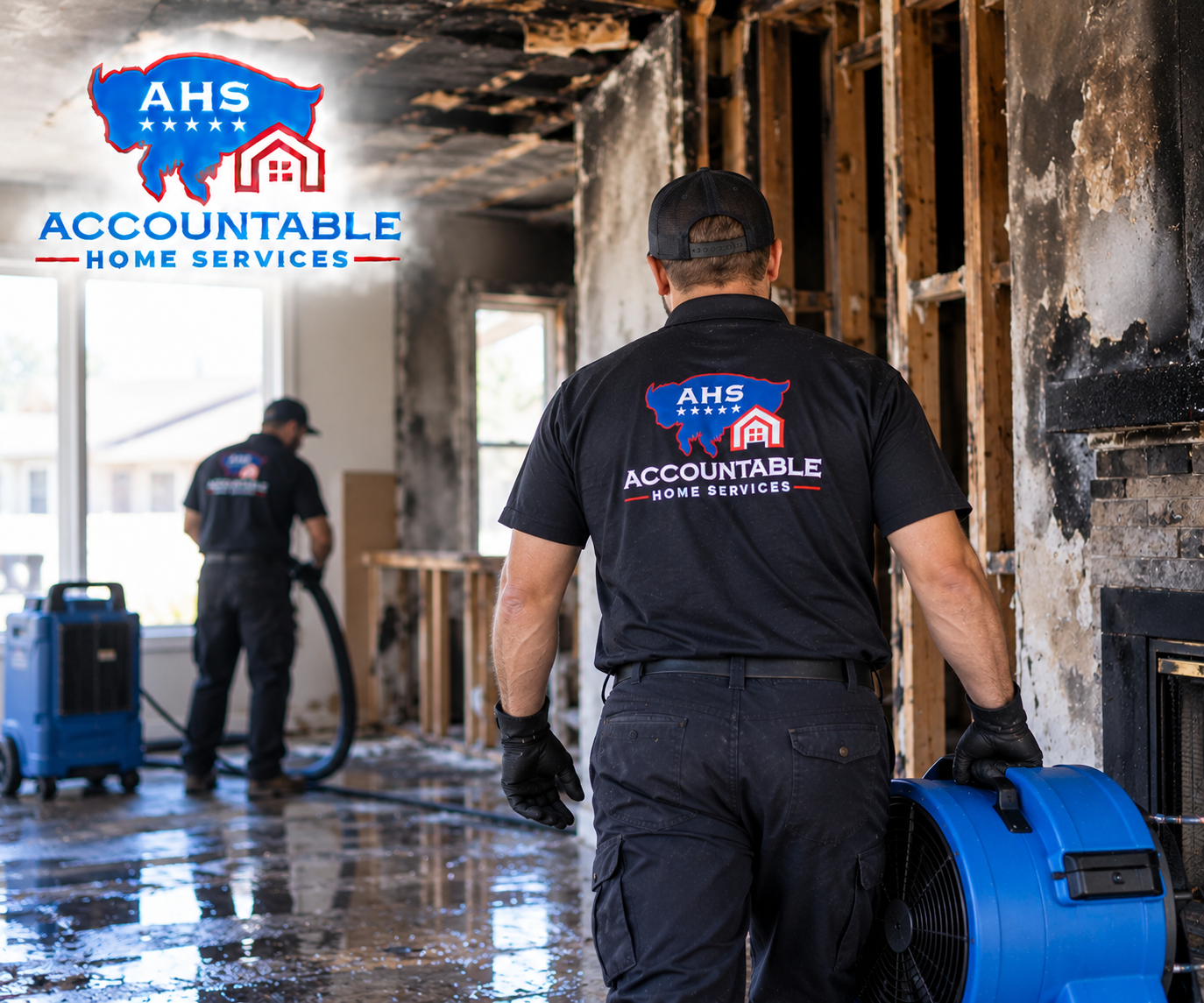
AHS helps homeowners understand the restoration path after contaminated water cleanup. That may include containment, extraction, sanitizing, selective removal, drying, monitoring, and repair planning. The goal is to get the home back to normal while keeping the homeowner, insurance agent, plumber, or property manager informed.
If you are dealing with sewage backup cleanup Erie residents often need after septic failure, contact Accountable Home Services for emergency cleanup and restoration inside the home. If you need septic pumping, septic inspection, tank repair, line repair, or drain field troubleshooting, contact a licensed septic contractor right away. Getting both sides handled promptly helps protect the home, the people in it, and the documentation needed for the next step.